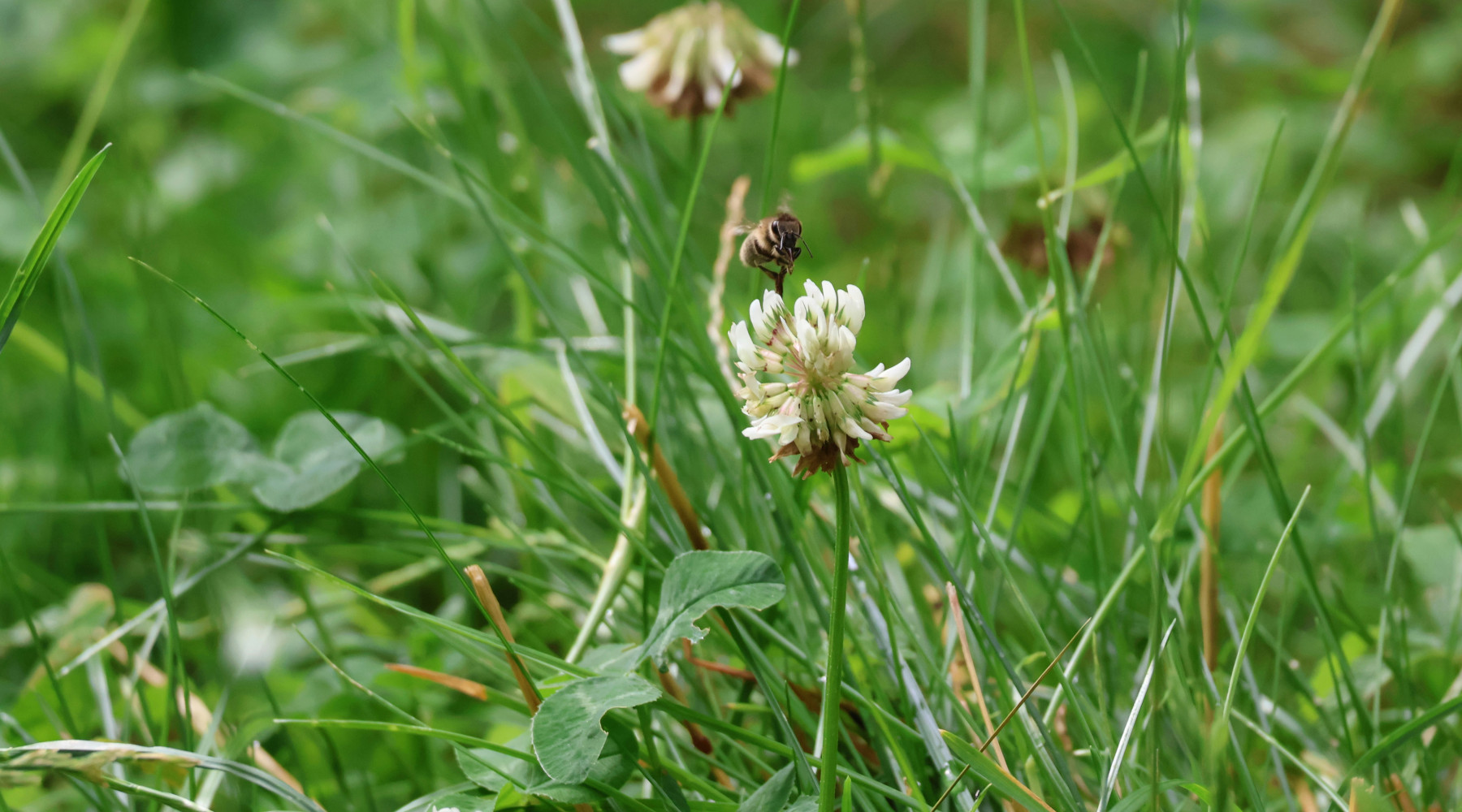

Minnesota homeowners are discovering the benefits of bee lawns, a unique and eco-friendly way to support local pollinators. Bee lawns combine traditional turfgrass with low-growing, flowering plants that provide essential nectar and pollen for bees.
Here’s everything you need to know about creating and maintaining a bee lawn.
What is a Bee Lawn?
A bee lawn is a mix of turfgrasses and flowering plants that can withstand mowing and foot traffic. Unlike traditional lawns, they offer food resources for pollinators, making them a valuable addition to any yard.
Benefits of Bee Lawns
Bee lawns offer several advantages over traditional lawns:
- Support for Pollinators: Bee lawns provide nectar and pollen for bees and other pollinators, which are crucial for plant reproduction and biodiversity.
- Low Maintenance: Once established, bee lawns require less water, fertilizer, and pesticides compared to traditional lawns.
- Environmental Impact: Bee lawns contribute to a healthier ecosystem by supporting pollinator populations and reducing the need for chemical inputs.
How to Create a Bee Lawn
Creating a bee lawn involves selecting the right plants and following a few simple steps:
- Choose the Right Turfgrass: Fine fescues, such as creeping red fescue and hard fescue, are ideal because they require minimal inputs and grow well with flowering plants.
- Select Flowering Plants: Select low-growing plants that can tolerate mowing and foot traffic. White clover, self-heal, and creeping thyme are excellent choices.
- Prepare the Soil: Ensure your soil is well-drained and free of weeds. You may need to amend the soil with compost to improve its fertility.
- Planting: Sow the seeds of your chosen turfgrass and flowering plants. Water the area regularly until the plants are established.
- Maintenance: Mow your lawn at a higher setting to allow the flowers to bloom. Avoid using pesticides, as they can harm pollinators.
Lawns to Legumes Program
Minnesota’s Lawns to Legumes program offers resources and support for homeowners interested in creating bee lawns. The program provides workshops, planting guides, and cost-share funding to help residents install pollinator-friendly plantings in their yards. This initiative aims to increase pollinator habitats across the state and raise awareness about the importance of supporting pollinators.
Enjoying Your Bee Lawn
A bee lawn not only benefits the environment but also adds beauty and interest to your yard. Watching bees and butterflies visit your garden can be a rewarding experience. Plus, bee lawns can still be used for recreational activities, just like traditional lawns.
By creating a bee lawn, you’re making a positive impact on the environment and supporting the health of local pollinator populations. So, why not give it a try and see the buzz it brings to your garden?
For more information on bee lawns and how to get started, visit the University of Minnesota Extension website and the Minnesota Board of Water and Soil Resources. Happy gardening!
By Robin Trott, University of Minnesota Extension Educator, Douglas County
