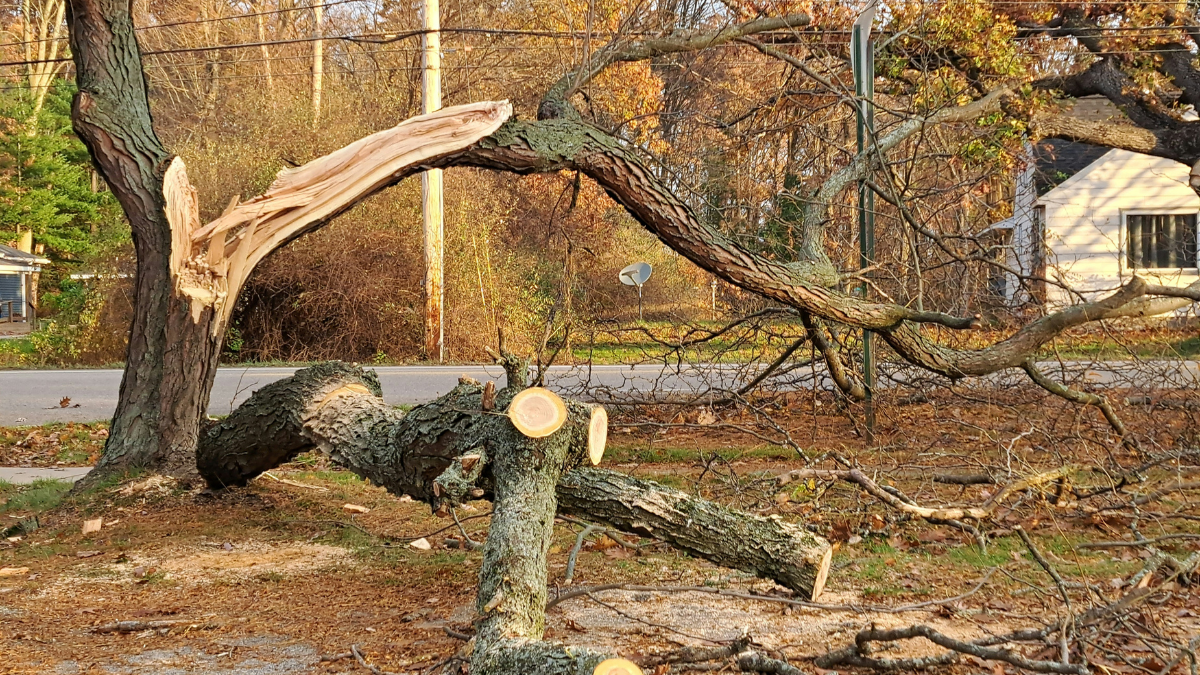

If you’re looking out at broken branches, split trunks, or uprooted trees after a storm, you’re not alone. Many homeowners and landowners are facing the same challenges. Deciding what can be saved, what needs to be removed, and how to move forward safely. This guide is here to help you make informed decisions about your trees, protect your property, and begin the recovery process with confidence.
Understanding Tree Vulnerability
Proper maintenance plays a critical role. Trees that have been neglected or improperly pruned—especially those that have been “topped”—are at greater risk. Topping leads to weak regrowth that is easily damaged in storms. Early pruning to develop strong branch structure can significantly reduce future storm damage.
Evaluating Damage After a Storm
After a storm, inspect trees carefully. Prioritize those posing immediate hazards, such as large broken limbs hanging over buildings or sidewalks. Always leave tree damage near power lines to utility professionals.
Assess each tree’s condition by looking for cracks, splits, or exposed wood. Severe damage, such as the loss of more than one-third of the bark around the trunk or broken tops in large trees, may require removal. Minor injuries, like broken side branches, often do not threaten the tree’s survival. Not all damage means a tree must be removed.
Repairing and Pruning
If treatment is needed, decide whether to hire a professional or do it yourself. Large trees or high damage areas should be handled by certified arborists, especially if climbing or chainsaw use is involved. When hiring help, check for insurance, references, and proper licensing.
For smaller repairs, homeowners can prune using proper techniques. Use sharp tools and follow the three-cut method to prevent bark tearing. Avoid flush cuts and never top trees. Pruning paints or wound dressings are no longer recommended, as trees naturally seal wounds.
Preventive Care and Replanting
Pruning young trees helps build strength and resilience. Begin developmental pruning a few years after planting, focusing on removing weak or crossing branches. Maintain live branches on at least 70% of the tree’s height and avoid removing lower branches too early.
When replacing trees, choose species known for storm resistance. Trees like ginkgo, redbud, and white oak tend to withstand storms better than more vulnerable species like silver maple or Siberian elm.
Storms are unpredictable, but with proper care and informed decisions, you can protect your trees and landscape. Regular maintenance, careful evaluation, and smart planting choices go a long way in ensuring your trees remain safe and healthy for years to come.
For more information on maintaining storm damaged trees visit go.iastate.edu/TREEDAMAGE.
By ISU Extension and Outreach
