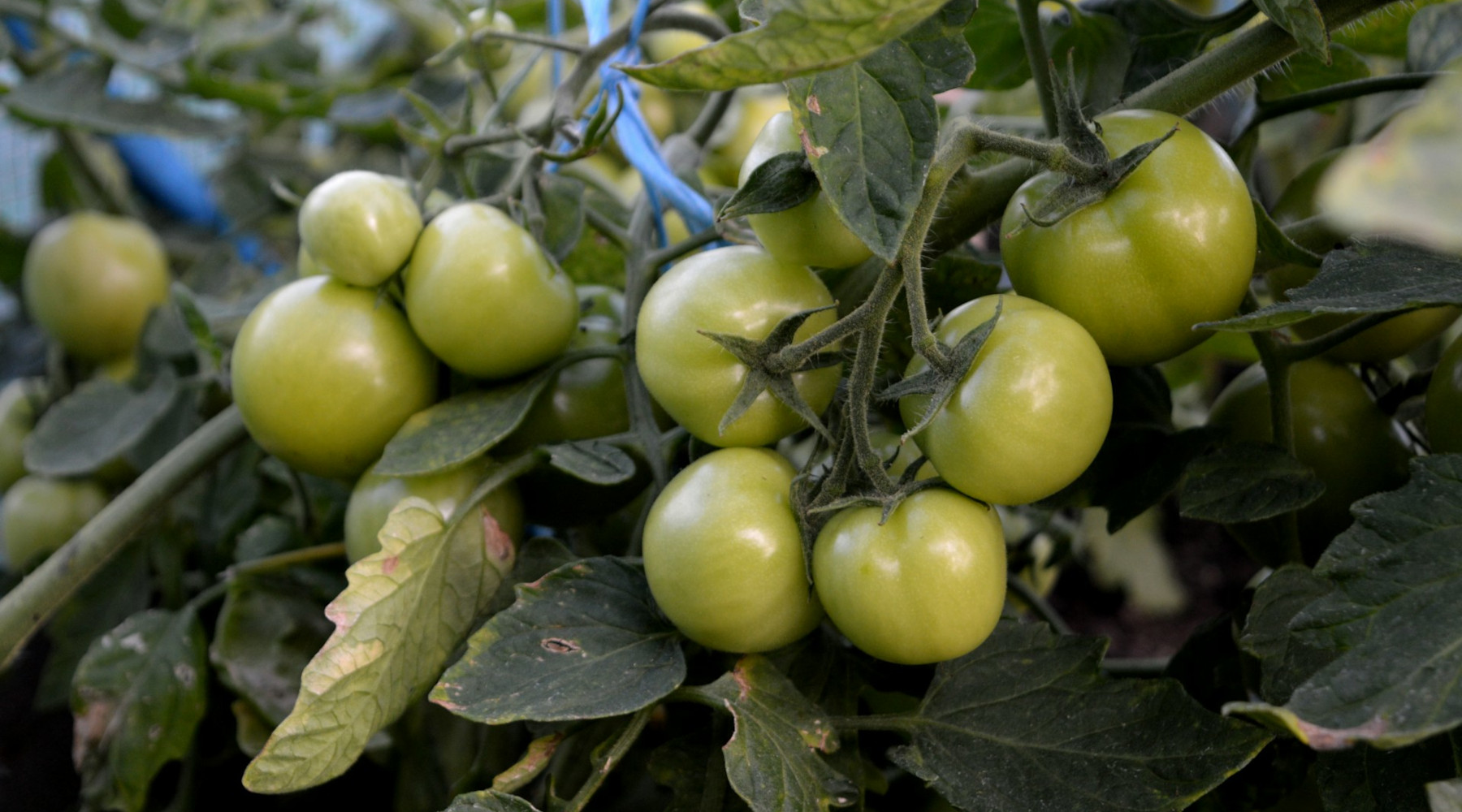

The summer is nearly over, and I still haven’t picked any of the large tomatoes that I painstakingly started indoors and nurtured in the early spring. Meanwhile, the “wild” cherry tomatoes that reseed themselves every year in my yard seem to be doing great and have garnished many of my dishes in the absence of the larger slicing varieties that I would prefer.
Turns out there are many reasons that can delay tomato ripening. Some are within our control, but others are certainly beyond our control. With all the possible ripening delay causes, it can be tough to pinpoint one particular issue. Let’s look at two particular causes that can delay tomato ripening: potassium deficiency and temperature.
Potassium Deficiency
Potassium is an important nutrient for fruit development and ripening. While being deficient in a soil nutrient may seem like a fertilizer problem, Illinois soils often have adequate amounts of potassium for tomato fruit ripening. When tomato growers experience stalled tomato ripening, soil tests often show adequate potassium levels. However, when testing the tissues of the tomato plant, they may reveal a deficiency.
What impedes tomato plants from taking up potassium? If we look back to the end of June and all of July, we endured lots of rain. Around Macomb, multiple rain gauges recorded over 10 inches for July. With lots of rain comes lots of clouds. And when it wasn’t cloudy, we were engulfed in a smog-laden ambiance from Canadian wildfire smoke. Both excess water and low light levels impede the uptake of potassium and can cause ripening problems.
Even as our soils dry and the skies have returned to a crisp blue, the poor potassium uptake may continue to impact the tomato ripening process. As the tomatoes begin to turn, they may still suffer from disorders such as yellow shoulder, internal whitening, and uneven ripening.
Temperature
Tomatoes originated in the Andes Mountains of South America, with their ideal average temperature of 75 degrees Fahrenheit (F). The optimum temperature range for ripening tomatoes is 68 to 77 degrees F. The further temperatures stray out of this range, the slower the ripening. And when temperatures stay out of this range for extended periods, ripening may halt completely. Once again, our 2025 July weather brought both daily highs and lows that stayed above 77 degrees for several days – long enough to significantly pause tomato fruit ripening.
Temperatures above 85 degrees hinder tomato plants from producing lycopene and carotene, the pigments that give a traditional ripe tomato its color. This often causes the fruit to appear yellowish-green to yellowish-orange.
Is there a way to fix these ripening problems?
If you’ve noticed a lack of solutions in this article, that’s because both potassium deficiency and temperature issues stem from the weather. The best approach is to wait it out. As late summer weather begins to change, tomato ripening should return to normal.
As of the release of this article, we still have all of September for tomatoes to ripen. However, if you are facing an impending frost, tomatoes can be ripened indoors. When the immature tomato fruit has shifted from a dark green to a lighter green or a little blush, that’s all you need to pick it and bring it inside to finish ripening.
Good Growing Tip of the Week: To ripen tomatoes inside, place them in a paper bag, stem end up. Punch several holes all around the bag and fold the top over. The bag will help to keep some of the natural ethylene gas in place, which aids in the ripening process. Depending on how underripe they are, tomatoes may take one to five days to ripen. Check them daily. You can also wrap individual tomatoes in newspaper for ripening.
By Chris Enroth, Horticulture Educator, University of Illinois Extension
