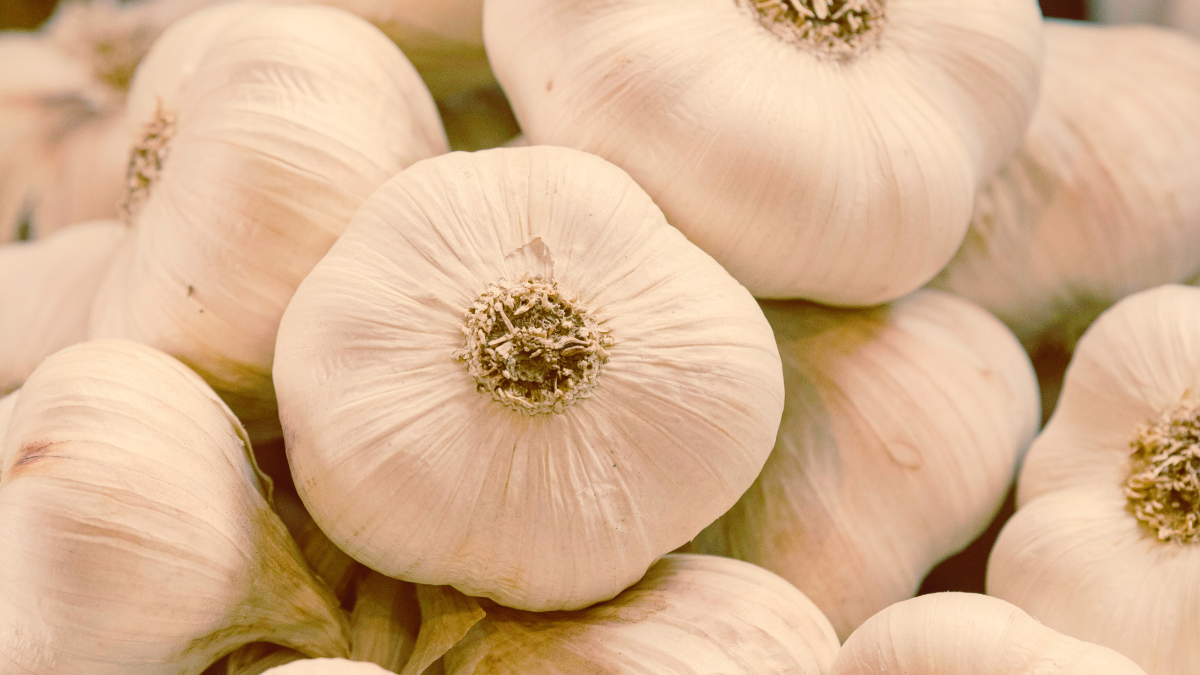

Once upon a time, garlic wasn’t just for flavor; it was for protection. Ancient folklore claimed that a clove of garlic tucked under your pillow could ward off evil spirits, cure illness, and even keep vampires at bay. Today, it’s less about superstition and more about sustenance, but garlic’s deep roots in both myth and medicine have made it one of the most fascinating crops in agriculture.
Right now, farmers across the country are breaking out their best bulbs and getting them in the ground. Fall is when next summer’s harvest begins, as cloves are tucked into cool soil where they’ll overwinter before sprouting strong, aromatic shoots come spring. It’s a quiet ritual repeated year after year, linking modern growers with ancient traditions that span continents and centuries.
From a symbol of protection to a staple of farm stands and farmers’ markets, garlic has traveled quite a path. Its story is one of transformation, from superstition and folk medicine to a flavorful crop that continues to thrive in fields, kitchens, and cultures around the world.
Ancient Roots: Garlic in Early Civilizations
Garlic’s story begins thousands of years ago in the rugged hills of Central Asia, where early farmers discovered that the pungent little bulbs they pulled from the earth were more than just food; they were power. Archaeologists have found evidence of garlic cultivation dating back over 7,000 years, making it one of humanity’s oldest domesticated crops.
The ancient Egyptians revered garlic as both nourishment and medicine. It was fed to laborers building the pyramids, believed to give them strength and endurance under the blazing desert sun. Garlic cloves were even found in the tomb of Tutankhamun, a testament to its value and spiritual significance. The Greeks and Romans took those beliefs and ran with them, using garlic to treat infections, boost courage before battle, and protect against disease.
In ancient China and India, garlic was prized for its healing properties long before modern medicine proved its antimicrobial powers. It appeared in early medical texts as a cure for digestive issues, respiratory ailments, and even depression; remedies that sound surprisingly familiar to the “home remedies” passed down through families today.
Garlic Crosses the Sea
When European settlers crossed the Atlantic, they brought with them a host of familiar crops and customs, and among their seed sacks and garden cuttings was garlic. Though it had been a beloved ingredient and remedy in Europe for centuries, not everyone in the New World was quick to embrace its bold aroma.
But garlic’s fate in America was saved by the immigrants who followed. Italians, Poles, Germans, and other Europeans arriving in waves throughout the 19th and early 20th centuries brought their love for the “stinking rose” with them. Their kitchens filled neighborhoods with the scent of sautéed cloves and simmering sauces, quietly changing America’s relationship with the crop one dish at a time.
By 1989, garlic began moving from immigrant kitchens into mainstream cooking. Farmers took notice, and small pockets of garlic cultivation began to sprout across the country, especially in fertile regions of California and upstate New York.
From Medicine Cabinet to Kitchen Staple
For most of history, garlic was valued more for what it could heal than for how it could flavor. Apothecaries and herbalists prescribed it for everything from coughs and colds to infections and fatigue. Soldiers in both World Wars used it as a natural antiseptic when medical supplies ran low, applying crushed cloves to wounds to prevent infection, a practice rooted in centuries of belief in garlic’s healing power.
The science, as it turns out, wasn’t far off. Garlic contains allicin, a compound with potent antimicrobial and anti-inflammatory properties. Modern studies have confirmed what ancient healers suspected: garlic can help lower cholesterol, boost immunity, and even support heart health. Its medicinal benefits were no myth, but its culinary potential was only beginning to be realized.
By the 1980s, garlic had officially made its move from the medicine cabinet to the cutting board. Celebrity chefs and cookbook authors began celebrating garlic’s rich flavor, giving it a starring role in recipes rather than a background note. The rise of international cuisine in American homes turned garlic into a household essential.
Fun Facts & Folklore
Few crops can claim a reputation as colorful as garlic’s. For centuries, it’s been equal parts medicine, superstition, and culinary magic: a humble bulb wrapped in legend.
A Supernatural Shield
Garlic’s mythic power runs deep. In European folklore, it was said to protect against everything from witches to werewolves, and of course, vampires. The belief was so strong that people hung braids of garlic over doorways or wore cloves around their necks to keep evil at bay. While that might not hold up to modern science, the idea of garlic as a force for good certainly endures.
A Global Love Affair
From the Mediterranean to the Far East, nearly every culture has woven garlic into its stories and cuisine. The ancient Greeks believed it gave athletes strength before competitions. In Korea, folklore tells of a bear transformed into a woman after surviving on nothing but garlic and mugwort, a tale symbolizing purification and endurance.
Guinness-Worthy Garlic
In 1985, a farmer in Ontario grew a single clove weighing over two pounds, proving that even the smallest crop can surprise you. Garlic festivals across the globe now celebrate the bulb in all its glory.
For all its history and humor, garlic’s magic lies in its consistency. Whether it’s seasoning dinner or starring in folklore, garlic continues to captivate. A small but mighty reminder that the best things often come in cloves.
A Crop with Bite
From ancient temples to modern farmers’ markets, garlic’s story is one of persistence and transformation. It’s a crop that has traveled the world, bridging science and superstition, medicine and flavor. Once believed to ward off spirits and disease, garlic now brings people together around kitchen tables, farmers’ fields, and festival booths.
As cloves go into the ground this season, farmers carry on a tradition that has lasted thousands of years, planting a crop that symbolizes both strength and renewal. Each bulb tucked into the soil promises not just next year’s harvest, but the continuation of a legacy rooted in resilience and flavor.
By Lila Nolan
