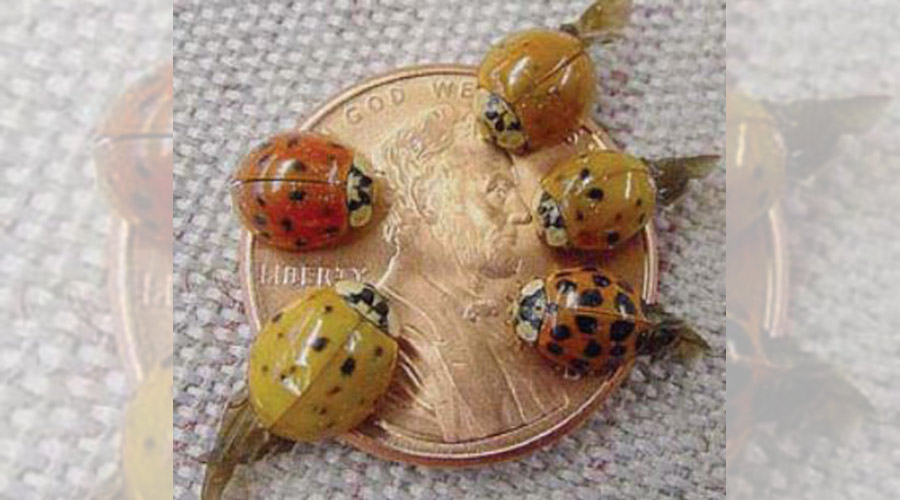

Every fall, I get calls that go something like this: “Jeff, there are hundreds of ladybugs in my house! What can I do?”
Well, those aren’t quite the ladybugs we grew up admiring. These orange-ish red, spotted beetles that have taken over our windowsills and ceilings in October are more properly known as multi-colored Asian lady beetles (ALB). Their story, like most invasive bug stories, is a little complicated.
Some folks insist the government released them down south years ago to help with aphids and mites on fruit trees. But the first real outbreak of ALB was recorded near New Orleans in 1988. It’s believed they rode into port aboard ships unloading goods from China or Korea. From there, they spread like wildfire, and today you can find them just about anywhere in the lower 48 states, plus parts of Canada.
For most of the year, these beetles are doing what we like them to do — cleaning up aphids, mites, and other soft-bodied pests in our trees and gardens. They really do earn their keep during the spring and summer. The trouble starts when the leaves begin to fall. That’s when they start looking for a warm, cozy place to spend the winter — and too often, that ends up being your house.
In their native habitat, Asian lady beetles overwinter in the hollows of trees or in protected cliff crevices. Around here, they settle for attics, wall voids, or any crack they can squeeze into. They seem especially drawn to the sunny, southwest sides of buildings that catch the afternoon light. Houses with light-and-dark contrasts — like white siding and dark shutters — are beetle magnets. Homes shaded from the afternoon sun tend to be spared the worst of it, but if you live near woods or fields, you’re still a prime target.
Once they find your house, they start clustering in large groups. They don’t carry diseases, and they won’t eat your wood or your food, but they can and do bite. It’s not much more than a quick pinch, but enough to get your attention. They also give off a yellowish, oily fluid that smells awful. That odor, by the way, is their defense mechanism to keep predators — and apparently humans — from bothering them. Winemakers have even had batches of wine ruined by beetles that got caught up in the grape harvest. Just a few bugs can spoil the taste.
Keeping them out is tough. The best approach is the same one that works for most unwanted insects: seal them out before they get in. Caulk cracks, repair window screens, and replace worn weather stripping. Be warned, though — when a billion beetles decide your house looks like home, a few are bound to slip through.
There are exterior insecticides that can help, including products with bifenthrin, deltamethrin, cyfluthrin, tralomethrin, or esfenvalerate. Apply them to the outside walls in early fall, just as beetles begin to congregate but before they start slipping inside. Once they’re in the walls, spraying won’t do much good.
If they do make it indoors, your best bet is to vacuum or sweep them up. Avoid spraying insecticides inside the living space; it just creates more problems than it solves. The good news is that their numbers usually taper off by winter. The bad news? Come late March, as the days warm, you may see them wandering out again, looking for a way back outside.
At this point, dealing with Asian lady beetles has become one of the realities of living in Indiana — like muddy boots or a tractor on the road during harvest.
By Jeff Burbrink, Extension Educator, Purdue Extension LaGrange County
