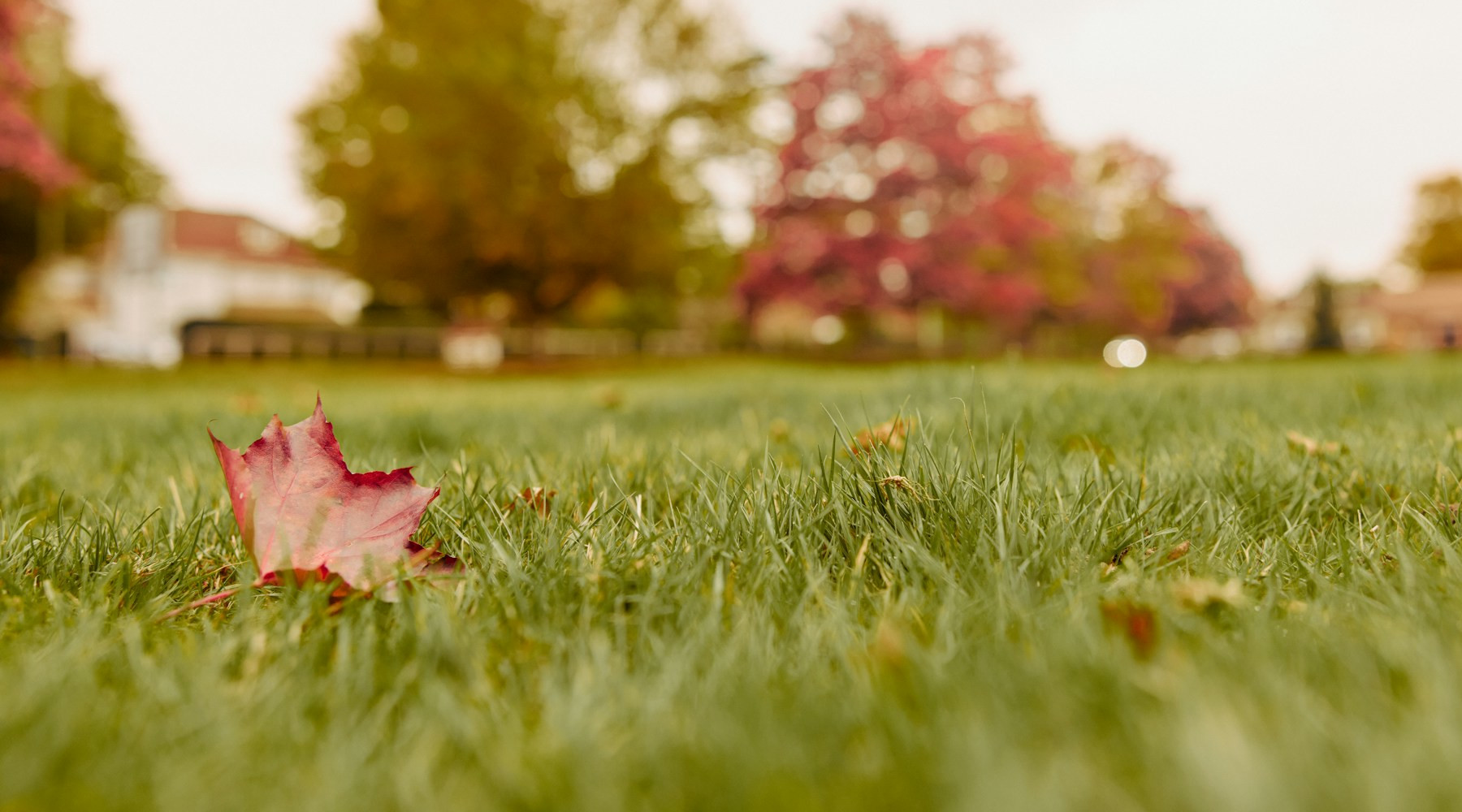

By the time November rolls around, most of us are ready to hang up the rake and call it quits for the year. The hoses are drained, the irrigation system is winterized, and the mower is eyeing its place in the corner of the garage. But before you settle in for a long winter’s nap, there are a few last chores that can make a big difference in how your lawn looks next spring.
One of the best things you can do for your yard this time of year is apply a late fall fertilizer—what most lawn companies call a “winterizer.” A shot of fertilizer in late October or early November helps strengthen the root system without pushing a lot of top growth. The grass may not look like it’s doing much up top, but down below, those roots are busy building reserves that carry the lawn through winter and jumpstart it in spring.
Think of it like putting food in the pantry before the snow flies. The grass blades may be slowing down, but the roots keep growing well into January. When warmer weather returns, those healthy roots send up shoots that fill in thin spots and help the lawn green up more quickly.
Now, let’s talk about mowing. It’s tempting to drop the mower deck a notch or two to chop up leaves, but resist that urge. Keep the mower set at least 2½ inches for your last cut—3 to 3½ inches is even better. Taller grass stores more carbohydrates in its leaves, which translates into a stronger, more resilient plant over the winter.
Mowing high isn’t just a November thing—it’s a good habit all year long. Taller turf shades the soil, conserves water, and makes it harder for weeds to get a foothold. Folks with weedy lawns often mow short, thinking they’re keeping things tidy, but that can actually give weeds the advantage. It’s better to mow a little high than to scalp the lawn.
Then there’s the annual question: what should you do with all those leaves? The answer depends on how thick they are. Research from universities like Purdue, Wisconsin, Minnesota, and Clemson shows that leaving a light layer of chopped leaves—about 10 to 20 percent coverage—can actually benefit the lawn. The shredded leaves act like mulch and return nutrients to the soil.
Here’s a simple rule of thumb: if you can’t see the grass after mulching, you probably need to remove some leaves. But if you can see most of the grass—say 80 percent—you’re in good shape.
In my own yard, I’ve noticed that some leaves, like silver maple or honey locust, shred easily with one pass of the mower. Others, such as red or white oak, are tougher and need a few more trips. Heavy, leathery leaves left in thick piles can smother the lawn, so I rake those up and move them to the compost pile. Using this mix of mulching and raking has cut my leaf-handling time nearly in half without any loss in lawn quality.
Finally, don’t forget water. It’s been a dry fall, and even though we’ve turned off the irrigation and rolled up the hoses, lawns still need moisture. Newly seeded areas, in particular, benefit from a little extra water going into winter. Trees, shrubs, and perennials also fare better when well hydrated before winter. As a rule of thumb, aim for about an inch of water per week—natural rainfall included—until the ground starts to freeze.
By Jeff Burbrink, Purdue Extension LaGrange County
