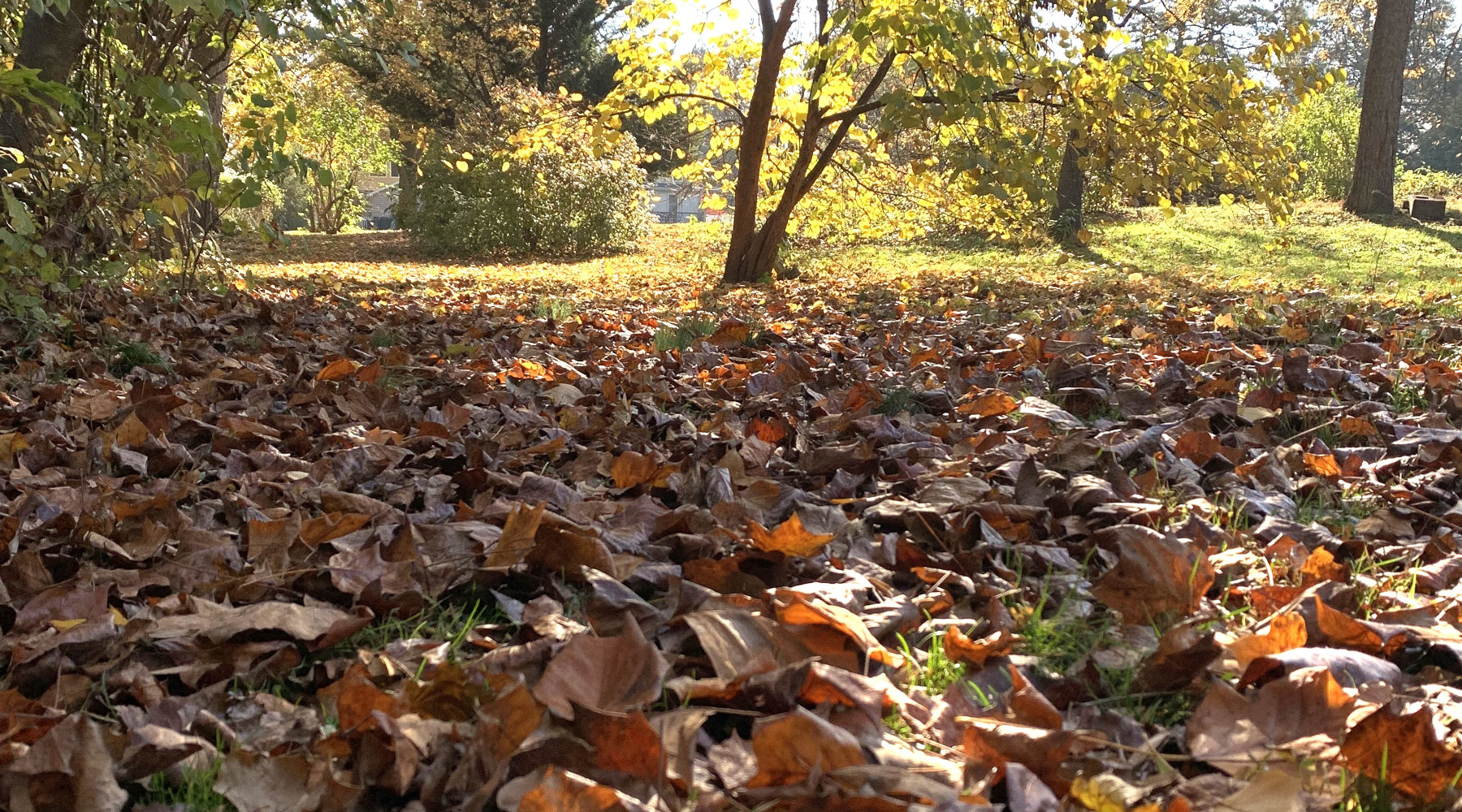

Taking a hike is one of my favorite things to do in the Fall. The crisp air and autumn forest smell bring back memories of hiking with my family to Flat Rock, in Cumberland County.
We would trudge up the steep trail, leaves crunching under our feet with every step. I would spy a bright, red maple or an interesting oak leaf and pick it up for further inspection or as a memento (at least until I was tired of carrying it.). Those fallen leaves were a reminder of the change of season, final harvestings, holiday gatherings coming quickly, and shorter, colder days ahead.
To some people fallen leaves are a nuisance to be raked or blown into piles and carried away from yards and public spaces. To them such clutter is better left in nature, far removed from gardens and manicured lawns adorned with holiday decorations.
But could it be that nature knows best, by offering this special autumn blanket?
Fallen leaves form an organic shroud that protects roots, important insects, and other critters from impending cold weather.
Leaves left on the ground in winter months become important habitat for pollinators who use them for warmth and protection. Not only are they important for pollinators, but birds, box turtles and salamanders use leaf litter for shelter.
As leaves break down and decompose, they put important nutrients back into the soil. Left as cover, they help the soil retain moisture and in doing so, they improve soil structure.
Leaves don’t have to remain on the lawn to provide benefits.
Mowed leaves can become mulch and then incorporated into the soil.
Composting leaves can also have benefits.
Adding leaves to gardens and flower beds protects and nourishes spring bulbs and other perennials.
In addition to soil, air, and wildlife benefits, native tree leaves are beneficial to water quality.
This organic matter allows more precipitation to soak into the ground, reducing nuisance flooding and polluted stormwater runoff while recharging groundwater supplies. Scientists estimate that forest floors infiltrate 10 to 15 times more precipitation than do equivalent areas of lawn.
Leaves also play an important role in supporting diverse and abundant life in local rivers and streams by creating something called watershed “tea.”
As rainwater enters streams, it carries with it dissolved organic matter soaked up from leaves and other material. Each watershed creates a unique blend based on the material available, much like your favorite flavor of tea. These organic “teas” provide food for bacteria that are uniquely adapted to the watershed.
Keeping leaves in place also benefits the air we breathe. Not using gas-powered yard tools to manage leaf litter reduces exhaust pollution which contributes to greenhouse gases. Leaves collected by some municipalities end up in landfills and produce methane gas as they decompose with garbage.
Trees and their leaves are invaluable for Pennsylvania’s landscape. No other practice is as good at restoring stream health, filtering the air, and providing wildlife habitat as strategically planting trees.
Since 2018, the Chesapeake Bay Foundation and over 300 partners of the Keystone 10 Million Trees Partnership have been working diligently and collectively to reach their ambitious goal of planting 10 million new trees in Pennsylvania by the end of 2025.
As we work to collect final numbers on our goal, those trees that I had an opportunity to help plant are taking hold in communities throughout the state, providing benefits to our local neighborhoods and waterways by shedding their leaves.
So do yourself a favor this Fall and leave some leaves where they fall. Like me, you might enjoy the crunching under your feet.
By Kristen Heberlig, PA Watershed Resiliency Program Manager, Chesapeake Bay Foundation
