
More than 20 million Americans planted a garden for the first time during the COVID-19 pandemic to save money and have easy access to food. While not all of them stuck with it, home improvement company Frontdoor found 71% of the people they surveyed planned to continue gardening in 2025 and beyond. Just as homes and yards get smaller, in 2026, gardening blossoms to snack and micro-gardens.
As both storage and available ground shrink, more people cultivate snack gardens. Whether it’s reduced harvests or literally smaller-sized fruits and vegetables, bite-sized produce grows in popularity. You don’t even have to toss them in the fridge; just grab a few off the vine and eat as you go.
The Frontdoor survey found 38% of Americans hope to reduce their food costs using a garden, and 3 in 5 say they plan to grow more than last year. Experts at Bonnie Plants say nearly 2 in 5 Americans under age 35 grew their own food in 2020 due to supply chain issues. It doesn’t matter where you live: in a subdivision with acre lots or a cramped sixth-story walkup, everyone has enough space for a micro-garden.
Return to their roots
The pandemic lockdowns are now well in the nation’s rear-view mirror, but gardens continue to grow. More than 7 in 10 Americans admit they started or continued planting food gardens in 2025. That’s up from an already healthy 61% in 2024.
There are several reasons behind the growth. Nearly half of Americans surveyed say they’re worried about the safety of food in grocery stores, and believe stores only offer low-quality produce. At the same time, 54% of 2025 home gardeners say they are explicitly trying to lower their grocery bills.
Of course, healthy eating is almost always a factor. Additionally, snack gardens are great opportunities to educate children on nutrition, biology and sustainable and mindful food choices. Home gardening also plants greater awareness of seasonality and helps people feel more connected to their food.
The 25th annual Garden Trends Report from the Garden Media Group notes that purpose-driven gardening and intentional living are on Americans’ minds this year. In 2026, there’s a greater focus on edible gardens, small-space food production and pick-and-eat growing.
Smaller can be better
Snack gardens aren’t a passing fad; they’re the result of an evolution building for years. Americans continue to embrace the idea that growing food at home is both possible and deeply satisfying. But with space at a premium, many had legitimate concerns about their ability to enjoy planting and harvesting food. Enter the snack garden.
A snack garden is a compact vegetable plot planted in containers, raised beds or small pieces of land specifically seeded with bite-sized, ready-to-eat vegetables and fruits that can be picked and eaten straight from the plant, with no preparation needed. What makes snack gardens different from regular food gardening is their whole philosophy: the harvest is the point, not the pantry. There’s no canning, no preserving, no figuring out what to do with a pile of zucchini. You walk past your balcony, grab a handful of cherry tomatoes or snap peas, and eat them on the spot.
Snack gardens offer instant gratification with small-scale growing, and can pop up anywhere. You just need 6-8 hours of sunlight and plants that produce small, snackable yields. For a new generation of younger, urban-dwelling growers, snack gardens are exactly the kind of low-effort, high-reward experience they were looking for.
Once established, you walk past your balcony, grab a handful of cherry tomatoes or snap peas, and eat them on the spot. Snack garden cucumbers can be devoured fresh or have a fun second life. Take a handful of small cucumbers and make a batch of no-cook refrigerator pickles in about 10 minutes; no special canning equipment required.
Cultivating change
USDA’s Economic Research Service projects overall grocery prices will rise 3.1% in 2026. As grocery prices continue to escalate, there’s no better time to grow your own food. And a snack garden not only helps save money but keeps you from reaching for the cookies, opting for a healthier snack instead.
You don’t get fresher and more seasonal than picking from your own backyard or window box. In a moment when so many people are stressed about grocery costs and food safety, a snack garden is one of the few things you can actually do about it without overhauling your entire life.
When you’ve got more green beans than you can snack on raw, a quick trip to the oven turns them into something even better, like oven-fried crispy green beans. In less than half an hour, you’ll have a side dish the whole family will actually fight over.
Millennials in particular prefer experiences and tend to gravitate toward smaller, more manageable growing formats. They’re a large portion of the 17% of Americans who live in condos or apartments, and those percentages skyrocket in larger cities.
The plant industry saw an opportunity and began breeding smaller plants specifically for the snack garden format. Seed companies like Kitchen Minis continue to roll out new compact, snackable varieties of multiple vegetables.
Social media harvest
Visually rewarding plant projects inspire, and compact snack gardens photograph well. The Pennsylvania Horticultural Society ‘s 2025 top garden trends report points out that garden influencers on TikTok, Instagram and YouTube are a growing trend. Even the smallest backyard can yield a harvest of snappable, snackable treats when you plant compact berry plant lines and small fruit-bearing trees.
Grow a bumper crop
Snack gardens can grow in yards, containers on a balcony or on a windowsill. “If you are new to snack gardening and have a small space, look for dwarf, bush or patio varieties of your favorite snacking fruits and veggies,” says Renee Gardner, founder of Renee Nicole’s Kitchen. “These tend to grow smaller than many trailing or heirloom varieties. Grape tomatoes, green bush beans, strawberries and even zucchinis can all be grown in grow bags on a patio to create your own snack garden.”
Still not convinced? The average food garden produces approximately $600 worth of produce per year from a starting investment of around $70. That’s more than $500 in savings. In 2024, those who grew food gardens estimated saving an average of $875 on groceries. A garden of just 100-200 square feet can supply one person with garden-grown produce year-round.
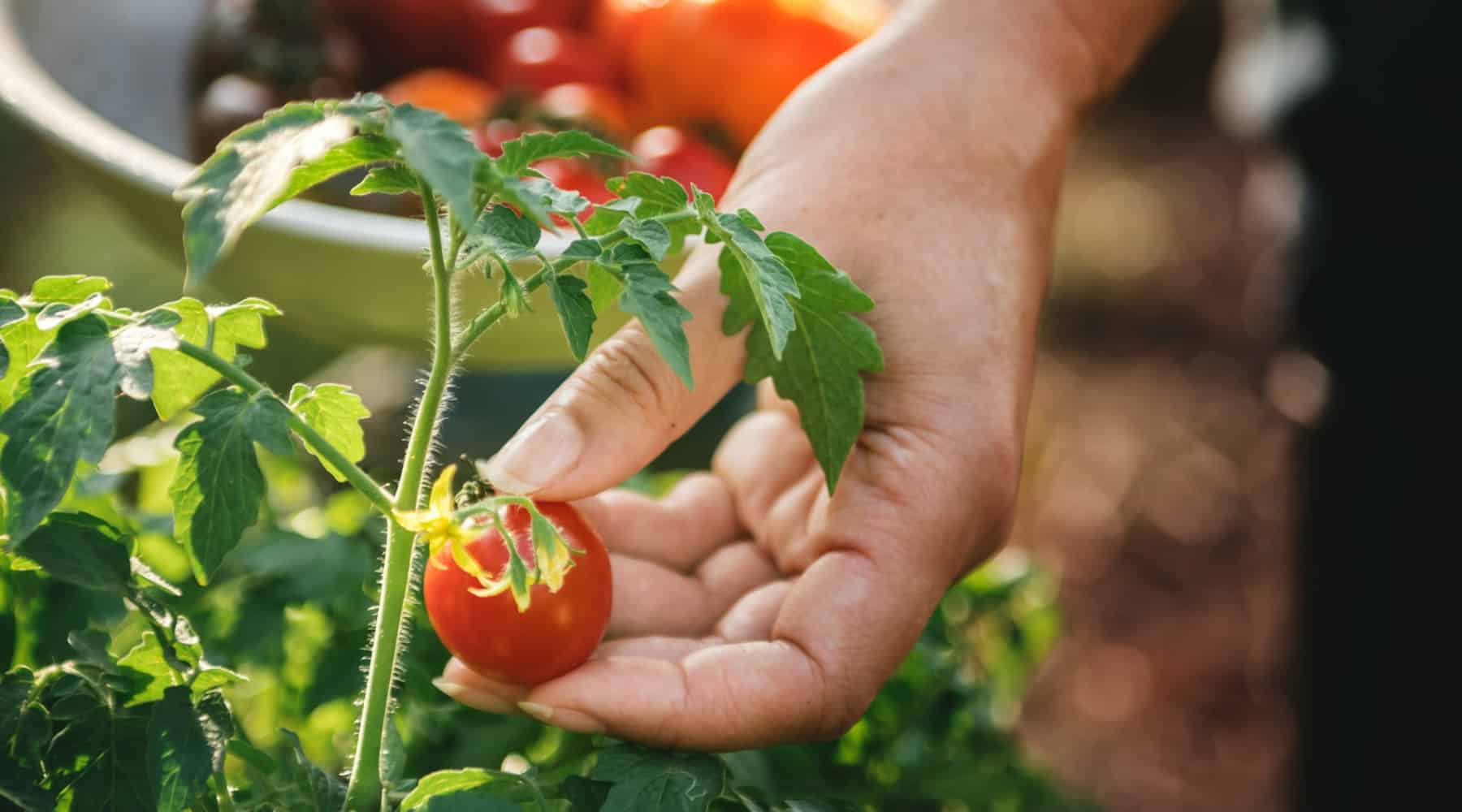
Cherry tomato varieties in particular can yield several hundred tomatoes from a single vine in a season. Most of them are eaten straight off the vine, but when you’ve got a little more than you can snack on, making mini Caprese pizzas is a timesaver and lets those fresh tomatoes shine.
Fruit of your labor
You’re not just eating better, although that’s definitely true. Homegrown produce is fresher and more nutritious than store-bought. Not to mention, kids who grow their own food are more likely to eat it. Participating in a garden not only leads to increased fruit and vegetable intake; it also helps reduce anxiety.
Emotional well-being while gardening is comparable to exercising and improves quality of life and our ability to see that improvement. A joint study found several overall positive impacts of gardening on mental and physical health.
“Living in a PNW townhouse with limited outdoor space, I started growing what I call a snack garden – small containers of herbs, greens and cherry tomatoes I can harvest in seconds while cooking or passing by,” shares Shruthi Baskaran-Makanju of Urban Farmie. “I’m seeing more people shift this way because it removes the biggest barriers to gardening: space, time and intimidation. Grocery prices may spark curiosity, but what keeps people doing it is the instant payoff and the confidence boost of growing something successfully. For beginners, quick growers like basil, lettuce, radishes and microgreens make it easy to start small and stay motivated.”
Sprouting a revolution
The benefits stack up across every area of life, from your wallet to your mental health. Families save money, eat fresher food, spend more time outside and give their kids a real connection to where food comes from. With grocery prices continuing to rise in 2026, the timing couldn’t be better for snack gardening to go from a topical trend to an everyday habit. All it really takes is a sunny spot and the right seeds.
Kristin King is the creator of Dizzy Busy and Hungry, where she has been sharing practical, family-friendly recipes and budget-friendly cooking tips since 2013. She is also the author of “Dinner Time Sanity Saver Cookbook,” offering stress-free meal solutions. Kristin lives in New Jersey with her husband, two sons and four cats, balancing her corporate career with her love of cooking and the outdoors.
By Kristin King, Food Drink Life
