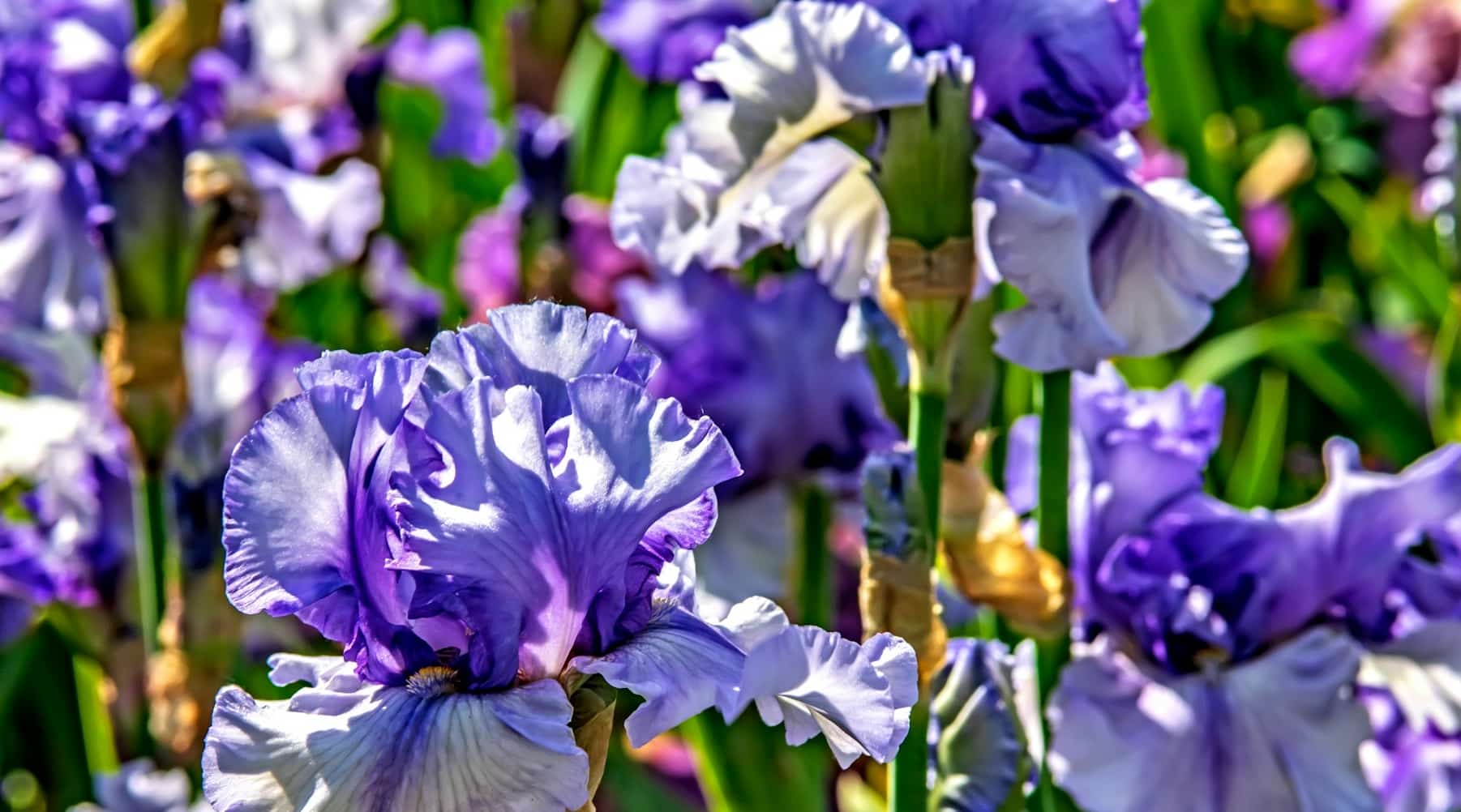

Few plants manage to feel both timeless and endlessly surprising, but irises do exactly that. With sculptural foliage, intricate blooms, and a dazzling range of colors, irises have earned their place in gardens for centuries. They appear in ancient mythology, medieval art, Southern cottage gardens, and modern landscapes alike—proof of a plant that adapts easily to changing climates, styles, and gardeners.
For Eastern North Carolina gardeners, irises offer a particularly appealing combination: show-stopping spring color paired with durability. While their flowers may look delicate, many irises are tough plants that tolerate heat, bounce back from drought once established, and are usually ignored by deer.
A flower rooted in history and meaning
The name iris comes from the Greek word for “rainbow,” reflecting the incredible spectrum of colors found within the genus. In mythology, Iris was the messenger of the gods, traveling between heaven and earth—a fitting symbol for a flower often associated with hope, renewal, and communication.
Irises have long been valued not only for their beauty but also for their structure. Even when not in bloom, their upright, sword-like foliage adds strong lines and texture to garden beds, making them reliable design plants from early spring through summer.
The many faces of irises
One reason irises continue to captivate gardeners is their remarkable diversity. There truly is an iris for nearly every growing condition.
Bearded irises are the most familiar type, known for the soft “beards” on their falls (the downward-facing petals). They prefer full sun and excellent drainage, making them ideal for raised beds and well-amended soils common in our region.
Louisiana irises are Southern standouts, bred from species native to wetlands and bayous. These irises thrive in hot, humid climates and tolerate heavier soils and seasonal moisture far better than many other types. Their blooms are broad, luminous, and often glow when backlit by spring sunshine.
Siberian irises offer a finer texture, with narrow foliage that blends gracefully into mixed perennial beds. While they prefer consistent moisture, many perform well in Eastern North Carolina when given good care and afternoon sun protection.
Dutch irises (Iris × hollandica) are familiar to many gardeners through spring bouquets and florist displays. Grown from bulbs, they produce elegant, narrow-petaled blooms in shades of blue, purple, white, and yellow. In Eastern North Carolina, Dutch irises are best treated as short-term spring accents rather than permanent landscape plants. They perform best in well-drained soil, full sun, and locations protected from excessive summer moisture. While they may not reliably return year after year, they are excellent choices for gardeners who enjoy seasonal color or cutting gardens.
Together, these types allow gardeners to layer irises throughout the landscape—from formal beds to naturalized areas near water.
Why irises endure in Southern gardens
Irises are not high-maintenance plants. Once established, they require little more than sunlight, appropriate soil conditions, and occasional division. They are long-lived, easy to propagate, and resistant to many common pests.
Another major advantage is their natural deer resistance. All irises contain compounds that are toxic if ingested, making them unpalatable to deer and rabbits. While no plant is entirely deer-proof, irises are among the most consistently avoided.
For gardeners frustrated by browsing wildlife, that alone makes irises worth celebrating.
Planting and care basics
Success with irises depends on understanding their differences.
Bearded irises need full sun—at least six hours daily—and sharp drainage. Their rhizomes should be planted shallowly, with the tops partially exposed to sunlight. Burying them too deeply is one of the most common causes of poor bloom.
Louisiana irises prefer their roots covered and appreciate consistent moisture. They tolerate heavier soils and can even thrive near ponds or in rain gardens.
All irises benefit from division every three to four years. Crowded clumps bloom less and are more prone to disease. Dividing rejuvenates plants and provides an easy way to share irises with friends and neighbors—one of gardening’s oldest traditions.
Iris Cultivar Quick Reference
(Well-suited to Eastern North Carolina)
Bearded Irises (Iris germanica)
‘Immortality’ – white, lightly fragrant, reblooming
‘Beverly Sills’ – coral-pink, strong stems
‘Clarence’ – lavender-blue, vigorous grower
‘Dusky Challenger’ – deep purple, dramatic form
Louisiana Irises
‘Black Gamecock’ – velvety deep purple
‘Ann Chowning’ – rich blue, reliable bloomer
‘Cajun Sunrise’ – warm yellow tones
Garden note:
Bearded irises prefer excellent drainage and sun. Louisiana irises tolerate heavier soils and seasonal moisture. All listed cultivars are generally ignored by deer.
Common Iris Pests and Diseases—What to Watch For
Even tough plants like irises can experience occasional problems, particularly in warm, humid climates like Eastern North Carolina. Fortunately, most issues are preventable with good cultural practices.
Iris borer is the most serious insect pest affecting bearded irises. The larvae tunnel into leaves and rhizomes, causing yellowing, soft rot, and eventual collapse of the plant. Damage often begins in early spring. Removing and destroying old foliage in late fall and keeping beds clean can significantly reduce infestations. Healthy, well-spaced plants are less attractive to borers.
Leaf spot, a fungal disease, appears as brown or reddish spots on iris leaves and is more common during wet, humid weather. While unsightly, it is rarely fatal. Good air circulation, full sun, and avoiding overhead watering help limit its spread. Removing affected foliage at the end of the season is usually sufficient for control.
Rhizome rot is typically caused by poor drainage or overly wet soil. Affected rhizomes become soft, mushy, and foul-smelling. At the first sign of rot, dig up the plant, cut away damaged tissue, and replant healthy sections in well-drained soil. For bearded irises, keeping rhizomes slightly exposed to sunlight is key to prevention.
Most iris problems stem from excess moisture, overcrowding, or poor airflow. With proper siting and routine cleanup, irises remain among the most reliable perennials in the Southern garden.
A plant worth celebrating
Irises are not instant-gratification plants, but they are generous ones. With a bit of patience and proper placement, they reward gardeners with years—often decades—of dependable beauty. In a gardening world full of fleeting trends, irises remain steadfast, bridging old gardens and new, ornamental beauty and practical resilience.
For Eastern North Carolina gardeners seeking plants with history, variety, and backbone, irises deserve their moment in the spotlight.
Suggested Reading
• A Guide to Bearded Irises by Kelly D. Norris
• The American Iris Society (iris-society.org)
• Louisiana Iris Conservation Initiative
• Southern Living Garden Book, Iris section
If you have questions about your home garden or landscape, contact Gene Fox, Consumer Horticulture Agent with the North Carolina Cooperative Extension Service, at gene_fox@ncsu.edu or (252) 946-0111. Beaufort County Master Gardeners are also available through Greenline on Mondays and Wednesdays from 10:00 a.m. to 12:00 p.m. Be sure to follow the Beaufort County Master Gardeners on Facebook for additional gardening resources. Suggestions for future column topics are always welcome.
This article was written by Angela Mason Foster, Beaufort County Master Gardener Volunteer.
By Angela Mason Foster, Beaufort County Master Gardener, N.C. State Extension
