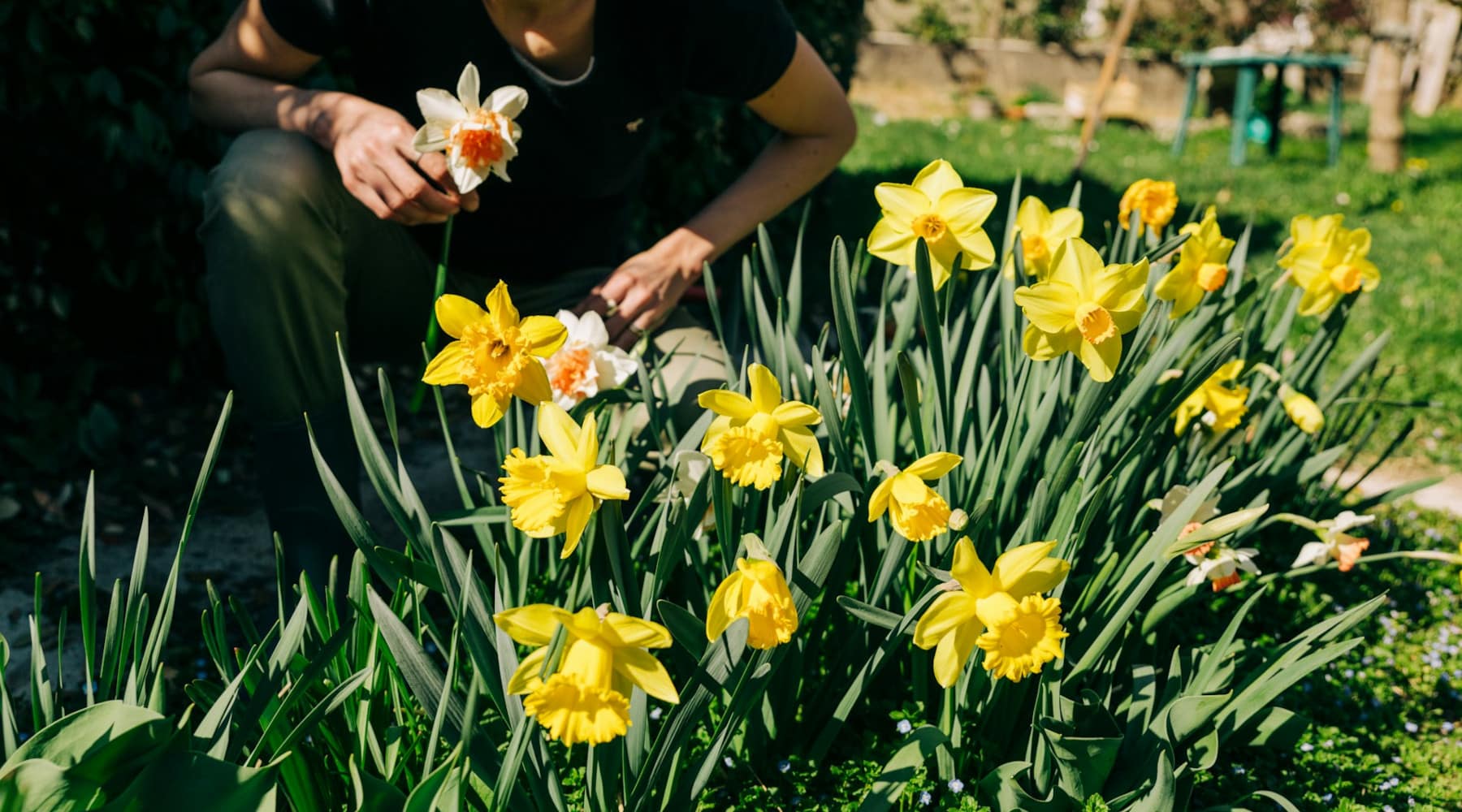

Few plants announce the arrival of spring in Iowa as reliably as daffodils. These hardy bulbs in the genus Narcissus light up landscapes with cheerful blooms and return year after year with little maintenance, making them a favorite among home gardeners.
“Daffodils are one of the easiest bulbs gardeners can grow in Iowa,” said Aaron Steil, consumer horticulture extension specialist with Iowa State University Extension and Outreach. “They’re long-lived, dependable and largely resistant to pests like deer and rabbits, which makes them a great addition in the landscape.”
Explore daffodil types
While many people picture the classic yellow trumpet daffodil, the group includes thousands of cultivars with considerable diversity. Daffodils can vary in flower size, petal shape, corona (cup) size and shape and color, with flowers ranging from white to yellow to orange, sometimes combined in a single bloom.
Plant daffodils in the best garden locations
In the home garden, daffodils perform best in well-drained soil and locations that receive at least six hours of direct sunlight each day. They are especially effective when planted in clusters or drifts in perennial beds, along walkways or beneath deciduous trees, where they bloom before trees leaf out.
“Plant them amongst ornamental grasses, hosta, daylily and other perennials that will grow up later in the season and hide the foliage of the bulbs as it yellows,” Steil said.
Care for daffodils properly after bloom
Spring care is straightforward. Daffodils usually need little supplemental water, and gardeners can remove spent blooms after flowering. However, foliage should remain until it yellows and dies back naturally.
“That green foliage is critical,” Steil explained. “It feeds the bulb so it can store energy and bloom again next spring.”
Use daffodils as long-lasting cut flowers
Daffodils also make good cut flowers. Harvest stems when buds show color but are not fully open, and keep them separate from other flowers because their sap can shorten the vase life of the other flowers in the vase. Once blooms have spent several hours on their own, the water can be discarded and replaced, and the blooms won’t impact the longevity of the other flowers.
Divide and transplant daffodils to keep them thriving
When clumps become crowded, bulbs can be dug and divided after foliage dies back in early summer. Be sure to mark the location so they can be found later in the season. Replant immediately or store and plant in the fall.
“With minimal care, daffodils reward gardeners with decades of spring color,” Steil said.
For related content and more information, visit:
Yard and Garden: Iowa State University Extension and Outreach
Selecting and Planting Spring-Blooming Bulbs
Care of Spring-Flowering Bulbs after Bloom
By Aaron J. Steil, Consumer Horticulture Extension Specialist, Iowa State University
