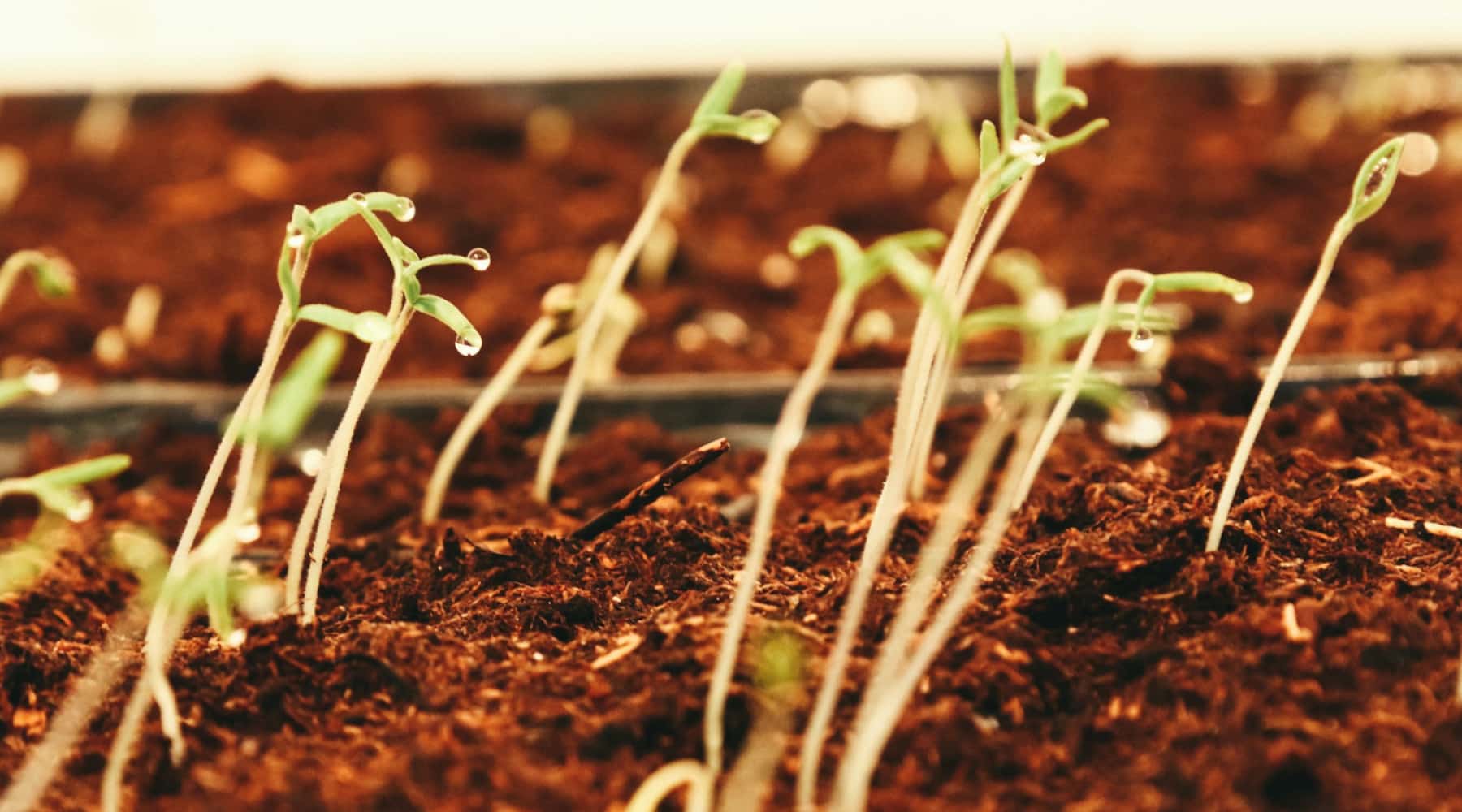

If your seed-starting setup looks more like a plant hospital than a nursery this spring, you’re not alone. Gardeners across Minnesota are seeing the same thing: pale seedlings, slow growth, uneven germination, and trays that just don’t look as sturdy as they usually do. It’s not your imagination, and it’s definitely not your gardening skills. This is simply one of those quirky years when several seed-starting challenges show up at once.
One of the biggest culprits is nitrogen-deficient potting soil. Many commercial mixes are lighter on nutrients this season, partly because manufacturers are using more sterile fillers and fewer composted ingredients. That helps reduce disease, but it also leaves seedlings sitting in what amounts to a nutritional desert.
Nitrogen deficiency is easy to spot: older leaves fade to pale yellow, stems look thin, and growth slows to a crawl. Thankfully, it’s also one of the easiest problems to fix. A diluted dose of nitrogen fertilizer can green things up within a week. Go easy, though, seedlings don’t need much, and too much fertilizer can burn tender roots.
Nutrients aren’t the only issue this spring. Many gardeners are also dealing with light starvation, those tall, stretched, floppy seedlings reaching desperately toward a window. After weeks of cloudy weather, even a bright south window isn’t enough. Grow lights placed just a few inches above the foliage make a world of difference and running them 14–16 hours a day helps seedlings stay compact and sturdy.
Uneven germination is another common frustration. Some seeds pop right up while others sit stubbornly still. Cool indoor temperatures, drafty windowsills, and inconsistent moisture all play a role. A heat mat can help warm-loving crops like peppers and tomatoes, and a humidity dome can keep moisture steady during those first few days.
And don’t overlook root stress. Overwatering, compacted soil, or poor drainage can leave roots brown and mushy instead of white and firm. If seedlings still look miserable after two weeks of better care, it may be time to repot into fresh soil, or, if they’re truly struggling, start a new batch. Even seasoned gardeners reseed a tray or two every spring.
So, take heart. If your seedlings look a little off this year, it’s not a failure; it’s just the season we’re in. A few small adjustments, a little extra light, and a splash of nitrogen are often all it takes to get your garden back on track.
For more news from U of M Extension, visit www.extension.umn.edu/news or contact Extension Communications at extdigest@umn.edu. University of Minnesota Extension is an equal opportunity educator and employer.
By Robin Trott, University of Minnesota Extension
