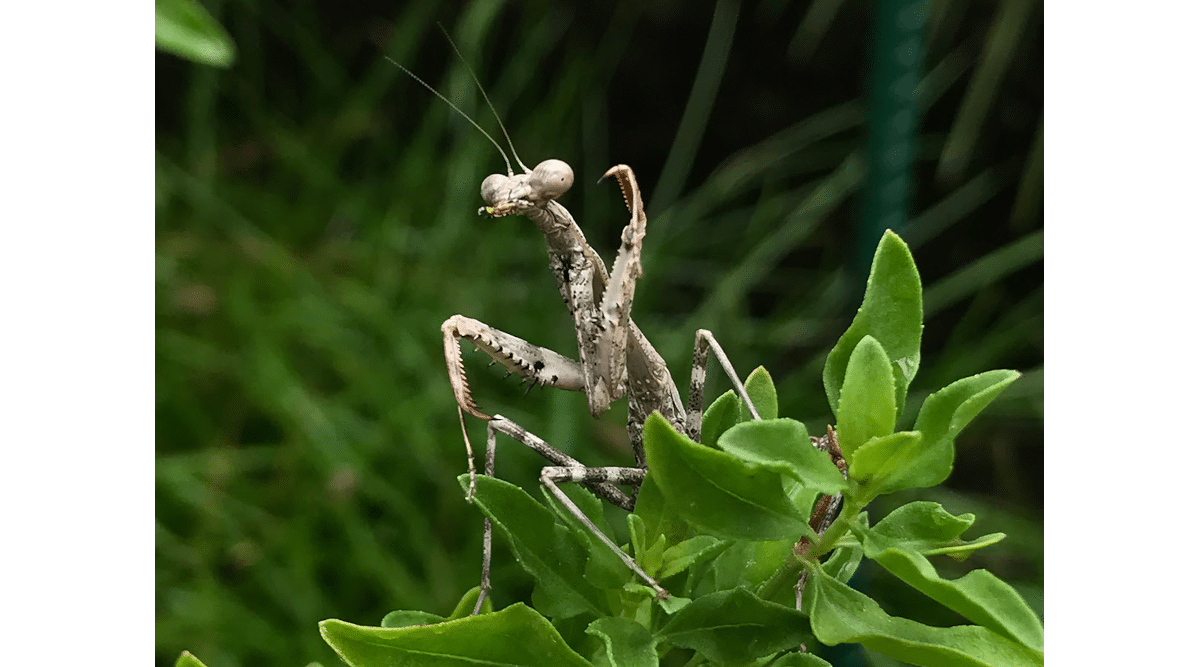

Praying mantids, commonly referred to as praying mantis, may look harmless, but they’re aggressive predators that eat a wide range of prey — from garden pests to pollinators.
With triangular heads, swiveling eyes and front legs held up as if in prayer, praying mantis are among the most recognizable insects in gardens and landscapes. Their appearance often sparks curiosity — and misconceptions.
Wizzie Brown, Texas A&M AgriLife Extension Service senior program specialist and entomologist in the Texas A&M College of Agriculture and Life Sciences Department of Entomology, explains some common myths and surprising behaviors.
Praying mantis or praying mantid: What’s the difference?
One common point of confusion is the name itself. Brown explained that the correct general term is praying mantid, which refers to any insect in the order Mantodea.
Praying mantis refers to a smaller group of insects within the order.
“All mantises are mantids, but not all mantids are mantises,” she said. “Praying mantis actually refers to a specific genus, while mantid includes all of them.”
Why do they look like they’re praying?
There is nothing holy about a mantid’s folded stance – what resembles prayer is in fact a coiled weapon, held in patient, deadly stillness. Their forelegs are armed with sharp spines and strike with lightning speed, snatching and securing prey in a vice-like grip.
“People hear ‘praying mantis’ and might think of something calm or even spiritual,” Brown said. “But that ‘praying’ posture is just how they hold their raptorial front legs that are designed for snatching and subduing prey quickly.”
Are praying mantids good for gardens?
Sometimes.
People often consider praying mantids to be beneficial insects that provide natural pest control. That’s because they eat common garden pests like caterpillars, grasshoppers, flies and leafhoppers.
However, Brown said they are generalist predators, meaning they’ll eat anything they can overpower. That includes beneficial insects such as bees and butterflies.
“They’ll eat pests, but they’ll also eat beneficial insects and pollinators, and even other mantids,” she said. “Food is food.”
Can mantids eat animals bigger than themselves?
Texas is home to several native mantid species like the Carolina mantis. It also has larger, non‑native species such as Chinese and Mediterranean mantids. Those larger species can sometimes capture prey people may not expect — including hummingbirds, lizards and even small mammals.
“It doesn’t happen all the time, but it can,” Brown said. “If there’s a mantid sitting on a hummingbird feeder, you might want to move it away from the feeder.”
Do females eat their mates?
One of the most common mantid myths is that females always eat their mates. While it does happen, Brown said it’s far less common in the wild than people think.
“A lot of those observations come from lab settings where males don’t have anywhere to escape,” she said. “In nature, males are much more cautious.”
Can mantids camouflage themselves?
Mantids also have surprising survival adaptations. For example, they can change color slightly between molts. This color change helps them to better match their surroundings and avoid being seen by predators like birds, spiders and lizards.
“They may look like top predators, but they’re part of a much bigger food web,” Brown said.
More about mantids
Ultimately, Brown said mantids should spark curiosity rather than concern.
“They’re fascinating insects,” she said. “The more people understand them, the more they appreciate the role insects play in our environment.”
Want to know more about insects?
Texas A&M AgriLife Extension’s Field Guide to Common Texas Insects helps identify and understand species you may encounter, from beneficial predators like praying mantids to common garden pests.
By Texas A&M AgriLife Communications
