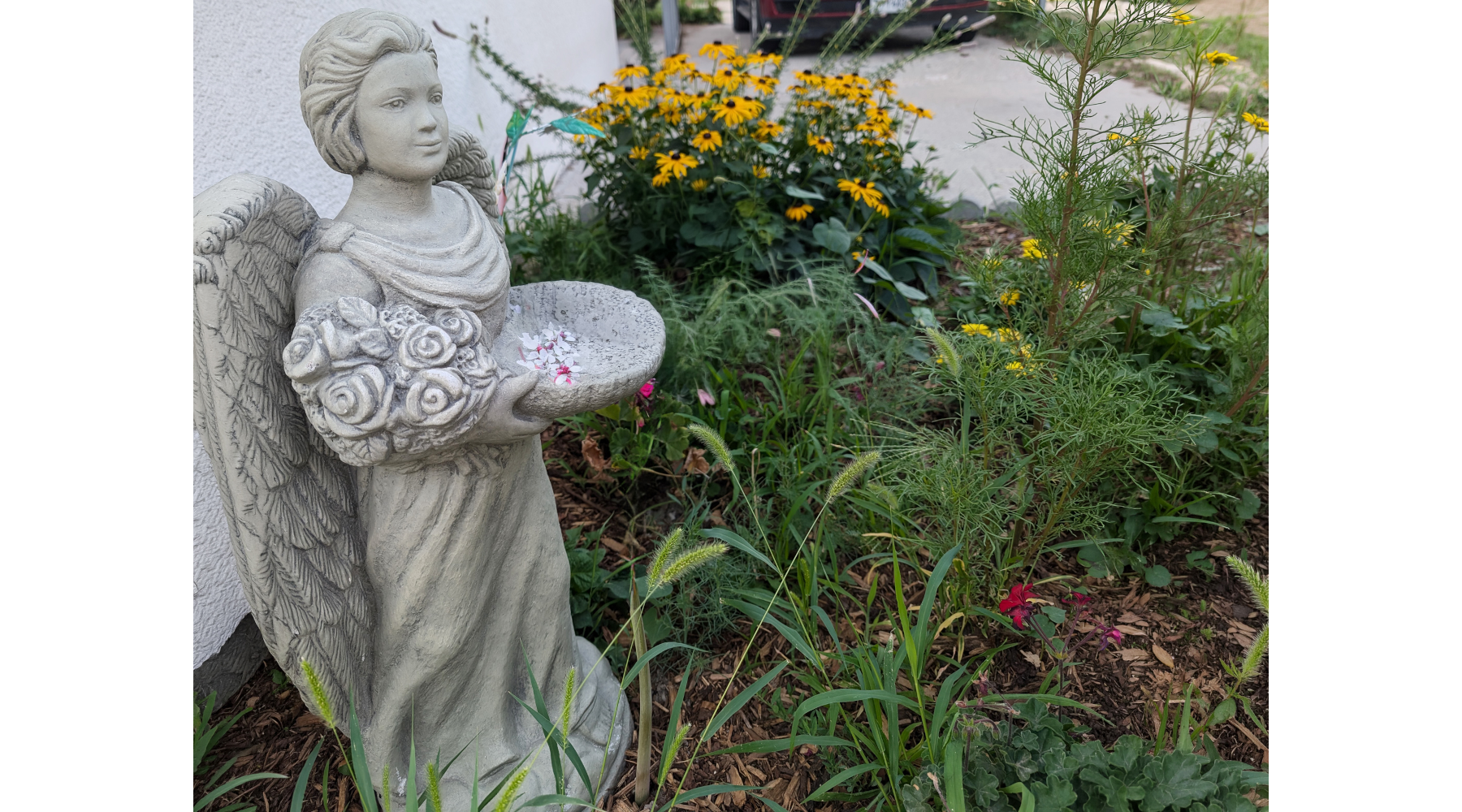

I’ve been asked lately about what to do now, in Spring, to prepare your garden and flower beds.
After planning, before planting, comes the prep stage. It’s simple. Step 1: Clean up garden beds after temperatures are consistently 50 degrees or higher. This may help with overwintering beneficial insect and pollinator populations. Step 2: Loosen the soil to create pore spaces, improving the soil’s water drainage and air movement. Step 3: Add organic matter such as compost, plant residues or worm castings to enhance the soil. And if you’re overly ambitious, add step 4: mulch between rows or around raised beds, helping to retain moisture, keep out weeds and provide walk paths for season-long use.
When growing plants in containers, even their soil should be refreshed every 1 to 2 years to replenish nutrients within the pot. Remove the top 2 to 3 inches of old soil from the pot. Add the discarded potting soil to your compost pile. Replace with fresh potting mix, worm castings, or organic compost. Perlite can be added to ensure proper drainage. Some plants prefer more drainage than others. If you’re continually growing tomatoes, eggplants, or potatoes in containers, replace the soil each growing season to reduce pest and disease pressure.
Spring is a great time to plant a tree. Ensure that the tree is not planted too deep, all casings such as burlap, plastic or containers are removed, and mulch is not mounded around the base. Detailed instructions can be found online, through the Nebraska Forest Service or PlantNebraska, formerly the Nebraska Statewide Arboretum. Be consistent in watering habits. Water trees and shrubs during prolonged dry periods when air and soil temperatures are above 40 degrees Fahrenheit. Keep the pruning schedule to winter or very early spring, before the active spring growing flush in April and May.
Spring fertilizing is a broad topic, but can be narrowed to a few questions. Key tips for Spring lawns include:
- Mow tall to retain stored energy carried over from the previous fall.
- Skip seeding until later in the year to allow proper establishment before the summer heat.
- Forget applying early-spring fertilizers to develop strong root systems; apply crabgrass preventers instead.
- Wait until mid-May to fertilize the lawn. Consider using a slow-release fertilizer, which is less likely to burn the turf.
- When applying chemicals or fertilizers, read the label carefully and follow the recommended amount. Never apply more than instructed and ensure even coverage.
- Garden soil can be tested in the Spring to determine if a top dressing of organic matter is needed or if growing plants need an application of synthetic fertilizer.
Finally, weeds. Take action as soon as you can. If it’s wet, pulling weeds is easier and is a great mechanical control method. Do not compost them. If you’re looking for a chemical control option, pre-emergent herbicides can prevent annual weeds while tackling emerging perennial weeds. The timing of applications is important. Winter annuals must be controlled before seed set in early summer. Summer annuals must be controlled before seed set, from mid to late summer through early fall. A good rule of thumb is that using herbicides at the end of the weed life cycle is often ineffective, costing you time and money. Weed identification is important. Reach out to your local Extension office for assistance.
Nebraska Extension is a Division of the Institute of Agriculture and Natural Resources at the University of Nebraska–Lincoln cooperating with the Counties and the United States Department of Agriculture. Nebraska Extension educational programs abide with the nondiscrimination policies of the University of Nebraska–Lincoln and the United States Department of Agriculture.
By Katie Markheim, Nebraska Extension Master Gardener Volunteer
