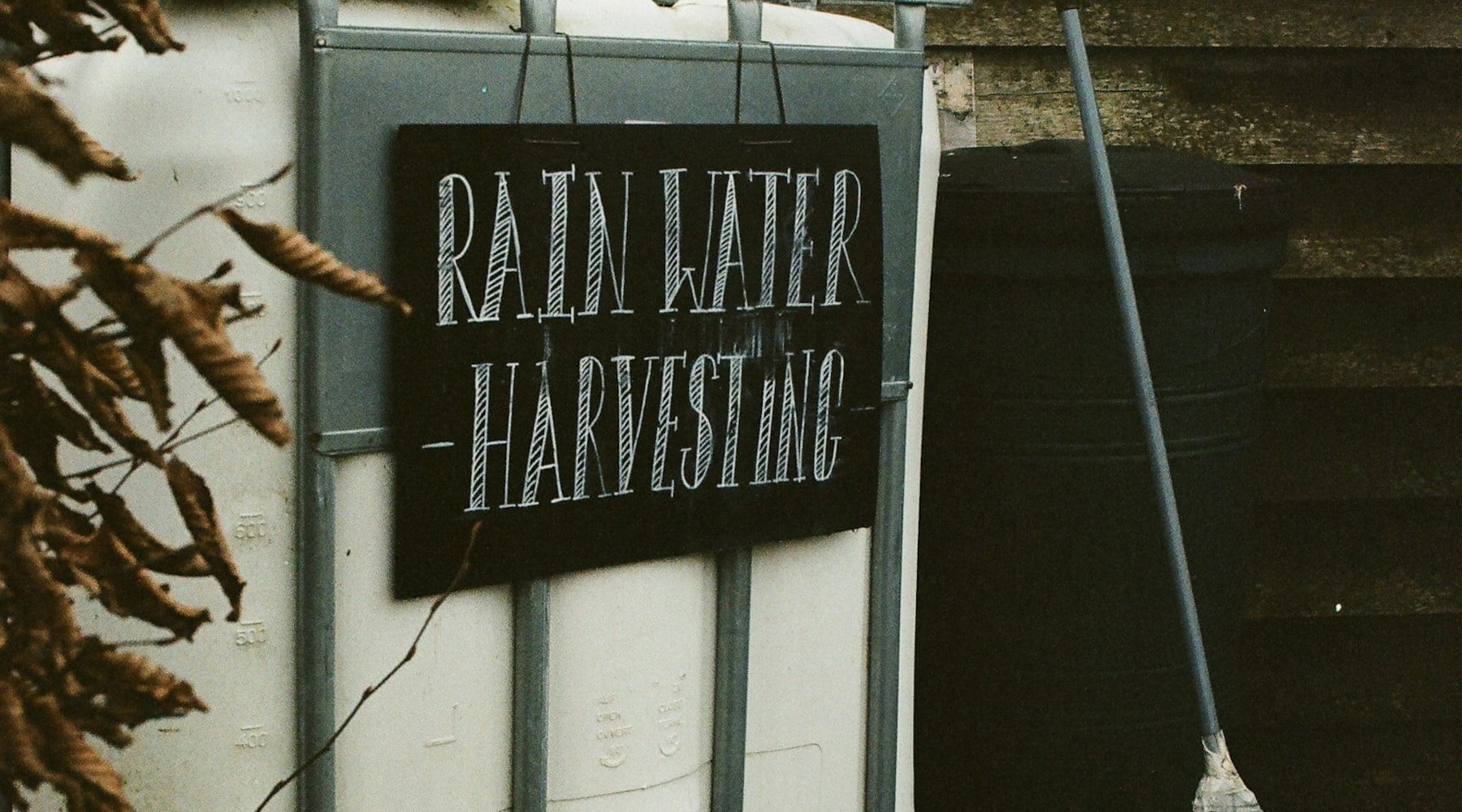

The collection and storage of rainwater for later use is nothing new. It was done long before any “green movement” was even thought about. History books say rainwater was collected centuries ago in India and the mid-East.
Every time we get one of those East Texas summer thunderstorms, thousands of gallons of water per house run off roofs, down driveways, into ditches, and eventually out of sight. A few days later, many of those same homeowners are dragging hoses across the yard trying to keep plants alive.
That idea would have seemed strange to early residents of Lufkin.
In more recent history, you can see an old photo of Sam Kerr’s sheet metal business on Cotton Square at the Kurth Memorial Library. Kerr manufactured water storage tanks for collecting rainwater in the very early 1900’s. There was a most helpful library employee, Cindy McMullen from the genealogy section, who told me she found records that Kerr’s business burned in 1903 and again in 1906. Kerr then moved his business “across town” to the current location of the Ward R. Burk Federal Building where it remained for 30 years.
Ruth Grant writes in her book “Lufkin Street Stories, Book 2” that cisterns were placed at the back of houses to collect rainwater. According to Grant, the shallow wells around town would dry up in the summer, making rainwater collection an important part of early Lufkin survival.
Today, interest in rainwater harvesting remains strong. So much so that in some dryer climates, newly constructed homes are required to have a rainwater collection system. In other residential areas, municipalities are paying homeowners to remove lawns and install rock/gravel landscapes.
A single inch of rain on 1-square-foot is equal to 0.62 gallons of water. Multiply that out over 1,000-square feet and you have over 620 gallons of water. Continuing this train of thought, take a 2,000-square-foot home. Add the garage, porches, and roof overhangs, and you may easily have 3,000 square feet of roof collecting rainfall. That roof can capture roughly 1,860 gallons of water from a single inch of rain.
As such, the “old” concept of collecting rainwater has gained a lot of new attention. As for me, it is a concept that I can get my head around. Unlike global changes, I can see my water bill, watch rainwater run into the storm drains, and see plants growing or wilting.
Water has been a largely ignored issue amongst most of us in East Texas. Even during the drought of 2011, Lufkin didn’t have any irrigation restrictions. And when you tell just about anyone else in the state that, they won’t believe you!
True, a rain barrel won’t irrigate ‘acreage’, but even a small system can water landscape beds for days. Our grandparents understood the value of storing water when it was available. With a few simple tools, we can do exactly the same thing today.
Cary Sims is the County Extension Agent for agriculture and natural resources for Angelina County. His email address is cw-sims@tamu.edu.
Educational programs of the Texas A&M AgriLife Extension Service are open to all people without regard to race, color, sex, disability, religion, age, national origin, genetic information, or veteran status. The Texas A&M University System, U.S. Department of Agriculture, and the County Commissioners Courts of Texas Cooperating.
By Cary Sims, Texas A&M AgriLife Extension Angelina County
