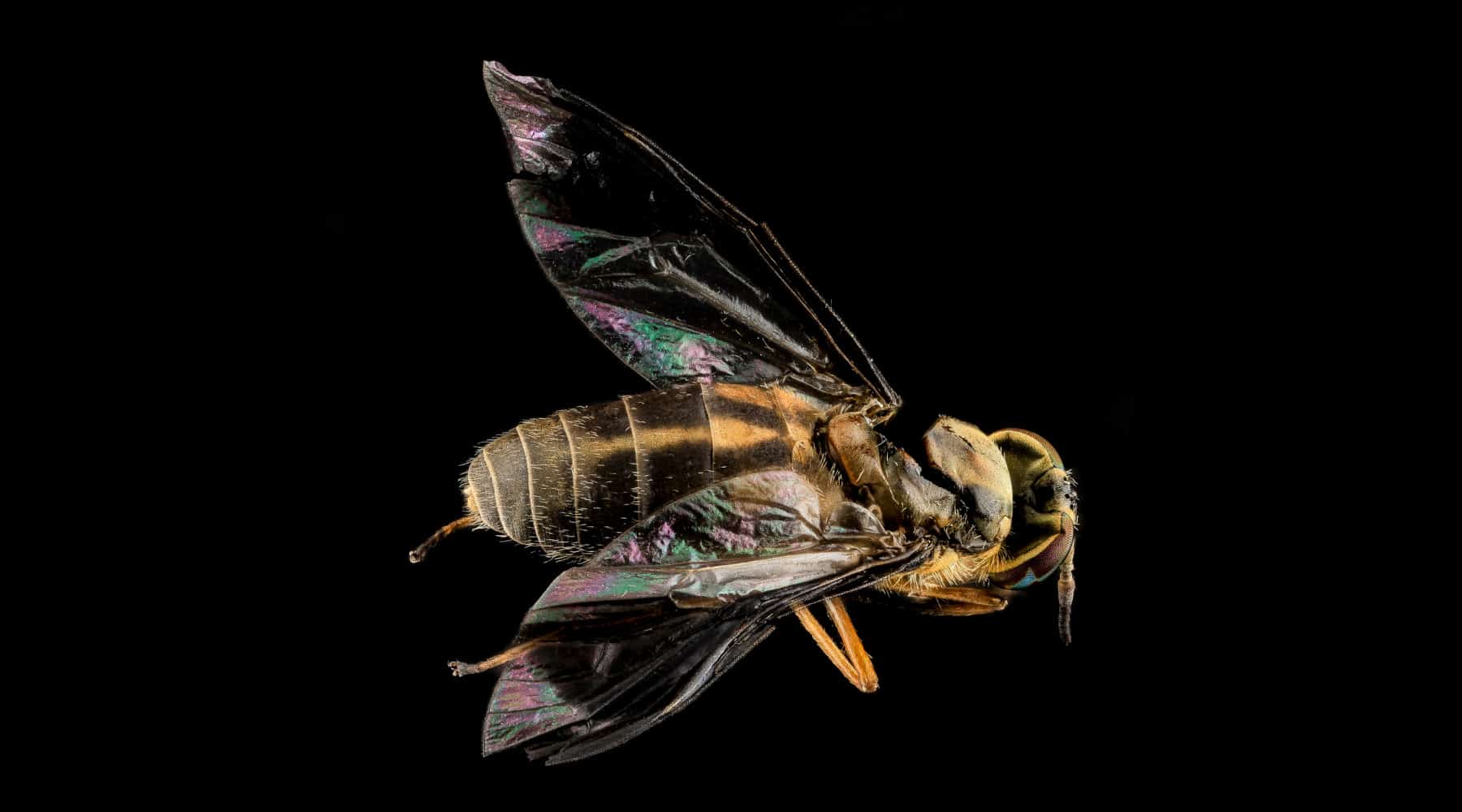

If you live or play near a woodland area in our region, you are no doubt experiencing the joy of deer fly attacks. The wet weather and humid conditions have brought us perfect conditions to have a massive deer fly outbreak in 2026. Their painful bites can make outdoor work and recreation unpleasant for humans and animals alike. In fact, there were several deer submerged to their necks in my pond this week, presumably seeking relief from these nasty pests.
Adult deer flies are about 1/2 inch long and have large eyes and distinctive wings marked with dark bands or patches. To me, they resemble the swept-back wing style of an F-16 jetfighter. They are active during the day and are especially attracted to movement.

Deer flies undergo complete metamorphosis, developing through egg, larval, pupal, and adult stages. Females lay eggs on vegetation over wetlands, ponds, marshes, and streams. After hatching, larvae drop to wet soil or shallow water before pupating the following spring. So, the infestation we are experiencing today started last year, and has been accelerated by the recent weather.
Female deer flies commonly bite the head, neck, and shoulders of moving hosts, including humans. They locate their victims (animals and people) by detecting carbon dioxide, movement, and dark colors.
There are no practical methods for controlling deer fly populations because larvae develop in natural wetlands. Insecticides and traps provide little long-term relief, and repellents offer only limited protection.
When deer flies are abundant, the best defense is to wear long sleeves, long pants, and a hat, and avoid heavily infested areas whenever possible. We will be “blessed” by their presence for about a month.
Repellents containing DEET, commonly used for mosquito issues, will have some limited effect, but when you have a billion insects trying to suck your blood, there is only so much a repellent can do.
There are some patches, typically sold in sporting good and hardware stores, which you can adhere to hats and clothing with the hope of catching the little beasts on a yellow, sticky pad. It gives me some satisfaction to find a few dozen stuck to the patch after a few minutes outside, but admittingly, it still does not seem to curb the number of bites I get.
By Jeff Burbrink, Extension Educator Ag & Natural Resources, Purdue Extension LaGrange County
