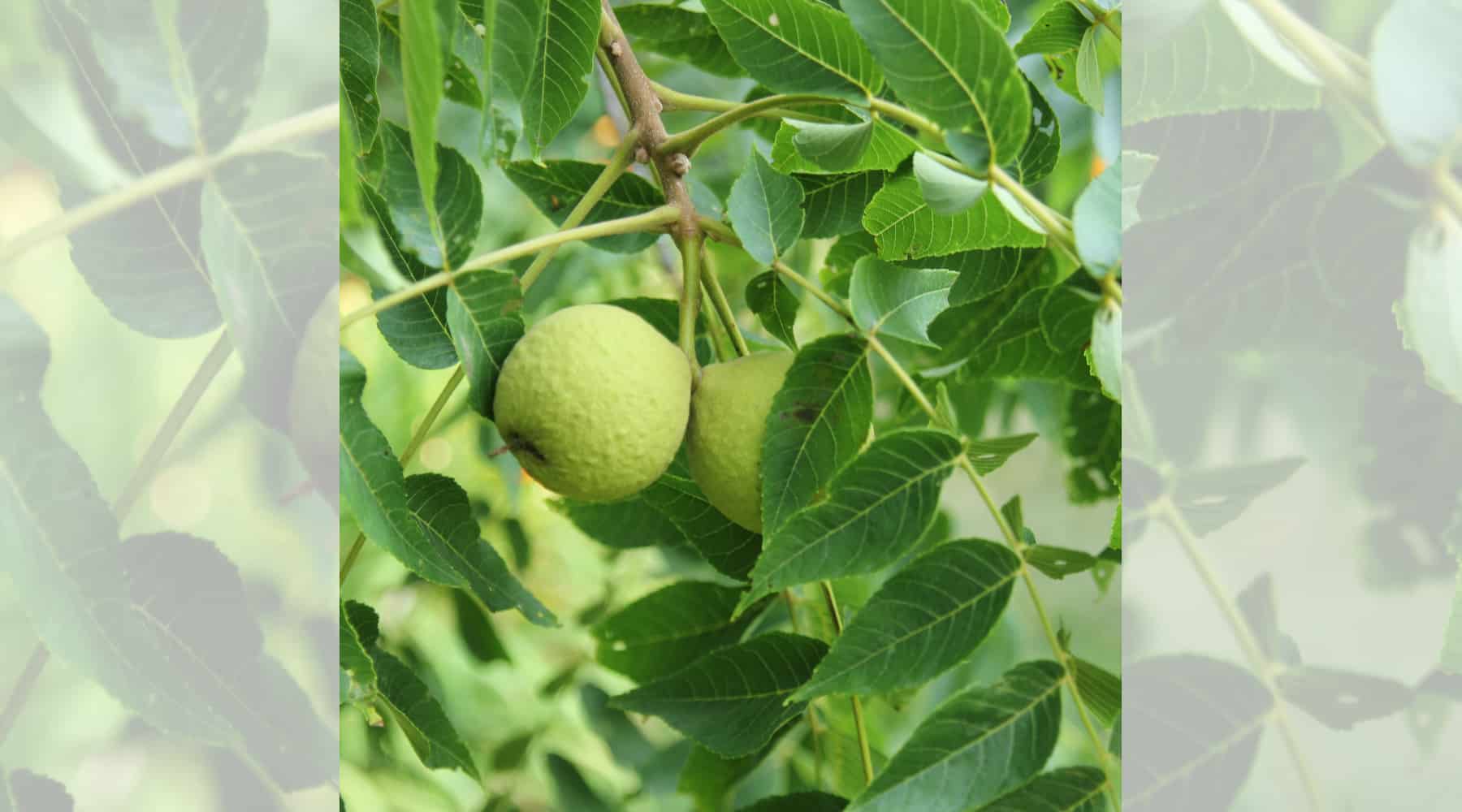

Black walnut trees can be large attractive trees in the landscape and are also popular with wildlife as a food source. One issue with these trees, however, is they can be toxic to certain plants growing in the vicinity.
Black walnuts, (Juglans nigra), produce the chemical juglone, which inhibits many types of plants growing near them. Juglone occurs in all parts of the plant, but is most concentrated in the buds, nut hulls, and roots. Greatest quantities are found in the area immediately under walnut trees, where roots are concentrated and decaying nut hulls and leaves accumulate. Butternut, (Juglans cinerea), also produces juglone but in lesser amounts.
Problems occur for sensitive plants primarily when they are growing in the root zone area underneath black walnuts. This is known as allelopathy, where one plant produces a substance toxic to or inhibiting growth of another. Juglone toxicity symptoms range from stunting, yellowing, partial to total wilting, to complete death.
Having a walnut tree in your yard certainly does not mean the landscape will be barren. However, if juglone-sensitive plants growing nearby show these symptoms, the walnut tree is a likely cause. Problems primarily occur when roots of susceptible species contact the tissue of the Juglans species, rather than juglone being released into the soil. Well-drained soil usually presents fewer toxicity problems than poorly drained soils.
Removing walnut trees is not a suggested solution, as tree roots will remain in the soil and present juglone problems indefinitely for sensitive plants. The best advice when gardening near black walnuts or butternuts is to use caution. If possible, locate gardens or landscape beds away from the root zones of black walnut trees. Avoid mulching garden areas with walnut leaves or nut husks. Root barriers or using raised bed structures to prevent walnut roots from advancing into garden areas may be helpful.
There are several plant species lists available indicating juglone-sensitive and juglone-tolerant plants. However, be aware that these are based on observation rather than formal testing, so you may see some plants listed as susceptible on one list and tolerant on another. Tomatoes, peppers, and potatoes are crops known to be sensitive to juglone. Among susceptible landscape plants are chrysanthemums, petunias, peonies, rhododendron, hydrangeas, lilacs, yews, cotoneaster, pines, white birch, apples, crabapples, basswood, and spruce.
There are several plants accepted as juglone tolerant. Vegetables include beans, beets, carrots, corn, melons, and squash. Some juglone-tolerant ornamentals include astilbe, asters, begonia, daylily, ferns, impatiens, pachysandra, sweet woodruff, zinnias, forsythia, most maples, oaks, most viburnums, eastern redbud, pagoda dogwood, arborvitae, and clematis. Lawn grasses, including Kentucky bluegrass and fescues, are tolerant of juglone.
By Bruce Spangenberg, Horticulture Outreach Specialist, UW-Madison Division of Extension
