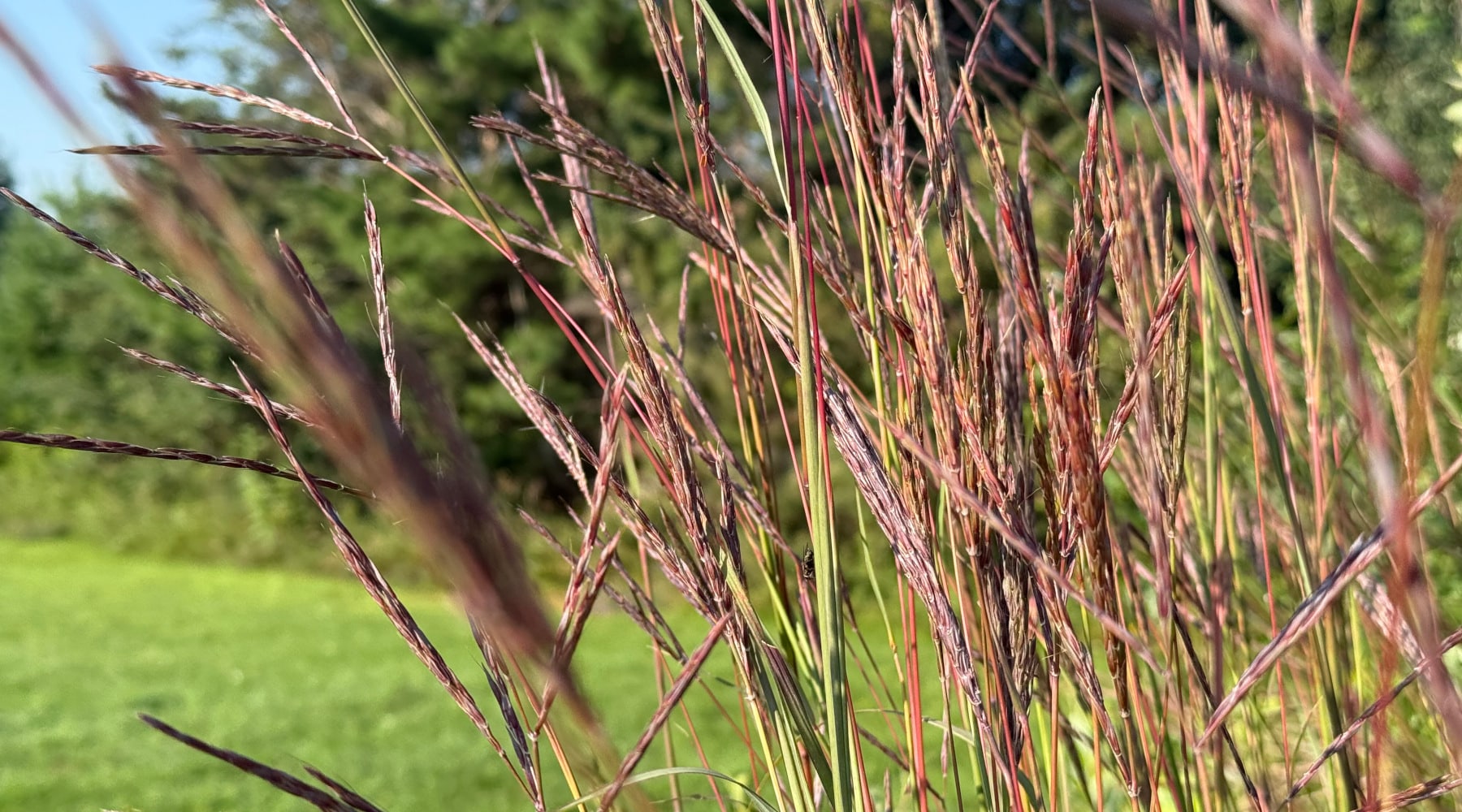

As seasons change, different plants take center stage in the landscape. Now that fall is arriving, late-blooming perennials move into the spotlight. This group of plants includes warm-season native ornamental grasses. Two popular species across Wisconsin landscapes are little and big bluestem.
Although they have the same common name and both are native to Midwest prairies, they are entirely distinct species. Little bluestem is botanically known as Schizachyrium scoparium, typically reaching around two feet but up to four feet in height with flowers. Big bluestem (Andropogon gerardii) as the name implies is taller, growing between four to eight feet in height including flower stalks. Both are winter hardy to USDA Zone 3, so can be grown anywhere in Wisconsin.
Both bluestems share being warm-season grasses, meaning they actively grow in the warmest portions of summer and develop flowers towards the end of that growth period, thus reaching their prime as landscape focal points right now. Flowers will transition into seedheads that persist and provide winter interest. Each provide ecosystem benefits, including food and cover for birds, small mammals, and even native butterflies. Both have short creeping rhizomes, allowing them to gradually spread over time and help stabilize soil.
Little bluestem is native to both tall and shortgrass prairies, featuring erect clumps of medium-textured, arching foliage that can vary in height and form. Foliage will be blue in summer and transition to combinations of purple, red, and orange in fall with cultivars developed featuring specific colors. Flowers will have a silverish shimmer on them as they move in the wind. Full sun areas with average dry soils are best, and very fertile soils may lead to plants flopping over. Ideal planting locations are in the foreground or middle of landscape beds. Group or mass plantings of little bluestem are highly effective in landscape settings, especially near water.
Big Bluestem is best known for its distinct “turkey-foot” flower structures, with yellow or cream-colored floral parts that first appear in late summer and persist as seedheads into winter. Full sun areas are best, as is well-drained soil. Big bluestem will tolerate heavier clay soils, however. With its taller height, consider planting in the mid or background portions of landscape beds, or even using as a natural screen.
Foliage of big bluestem is blue-green in the early season, transitioning to reddish as fall approaches. The cultivar ‘Blackhawks’ features darker green foliage changing to purple and almost black in fall. This cultivar has more compact and upright form than typical for big bluestem and was named Perennial Plant of the Year® for 2026 by the Perennial Plant Association.
By Bruce Spangenberg, Horticulture Outreach Specialist, UW-Madison Division of Extension
