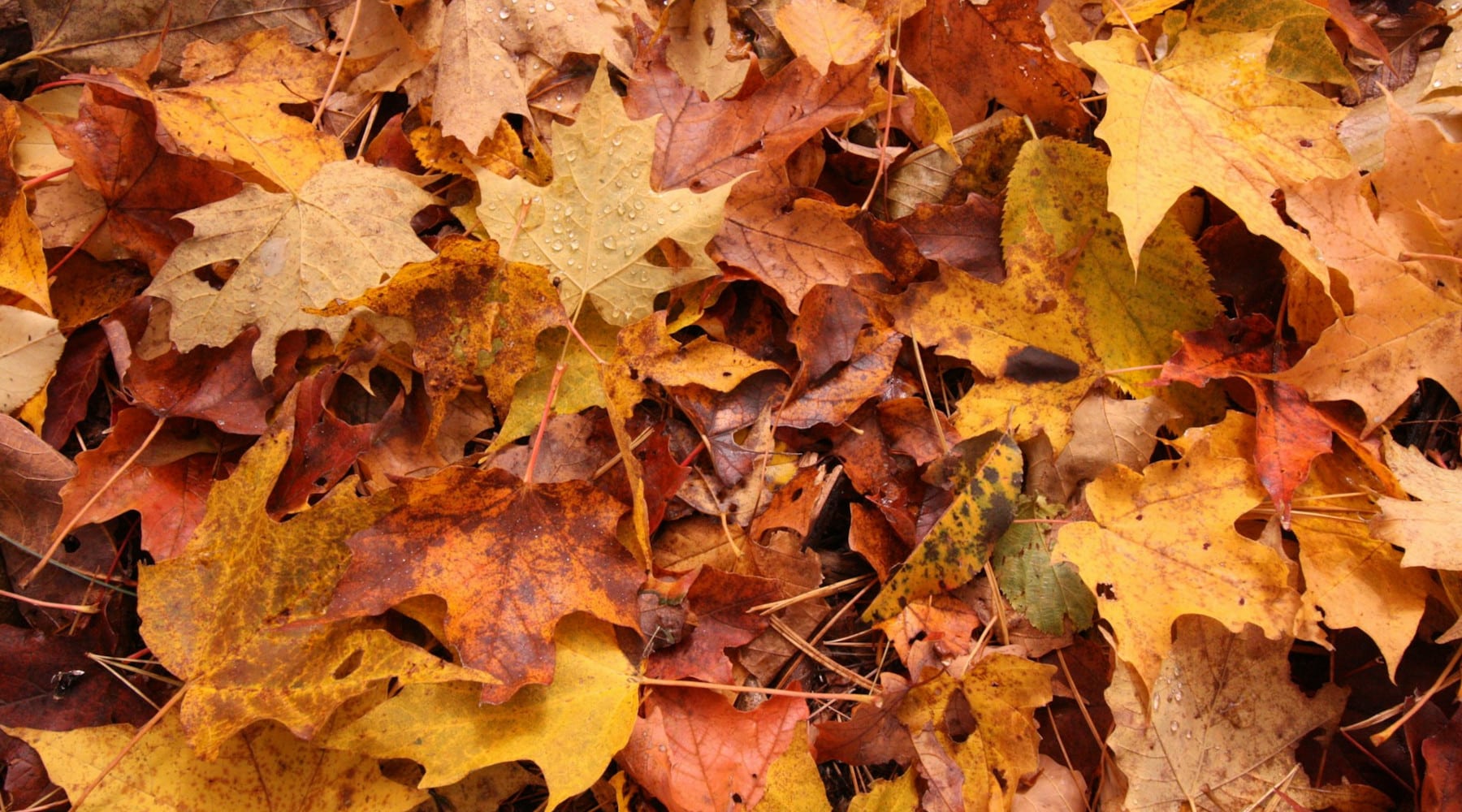

As leaves fall across Pennsylvania, many people face the familiar question of what to do with them.
While raking and bagging may seem like the obvious solution, Penn State Extension experts say fallen leaves can benefit soil, plants, pollinators and other wildlife.
So, where should leaves stay, when should they be removed, and how can people put them to use?
Annette MaCoy, Penn State Extension Master Gardener coordinator for Franklin County and an expert in consumer horticulture, has some answers. For those with mature trees, she said, autumn brings “a gift of great value.”
Q: What do you recommend people do with fallen leaves in different parts of the yard?
MaCoy: For lawns, mulch mow fallen leaves as you mow in the fall. This helps break down the leaves so they decompose and return organic matter to the soil, which benefits the turfgrass.
In vegetable gardens, fallen leaves can be rototilled in at the end of the season to decompose and provide organic matter to the soil over winter. In herbaceous flower beds, they can be put on as a mulch layer, whole or shredded, to protect soil and overwintering perennial plants.
For trees and shrubs, use whole or shredded leaves as mulch up to 4 inches thick around the base. Keep the leaves a few inches away from the tree trunk or shrub stems. Wetting the leaves after putting them down can help keep them in place.
Q: How do fallen leaves benefit the soil, pollinators and other wildlife?
MaCoy: A leaf layer helps protect the surface of the soil from erosion or drying out. As leaves decompose, they return organic matter and plant nutrients to the soil, improving soil structure and water retention — all good for future plant growth.
For pollinators and other wildlife, the natural leaf layer on the ground, usually 6 to 12 inches thick, provides habitat and overwintering protection for insects and other small animals, including box turtles.
Q: Are there any situations when leaves should be removed rather than left in place?
MaCoy: Yes. If leaves form a thick layer that completely covers turfgrass or groundcovers so you don’t see any green, most of the leaves should be removed: either shredded and used as mulch or stockpiled for future use.
Leaves on paths and walkways can become slippery, presenting a safety hazard. These can
be used as mulch elsewhere or stockpiled.
Q: What do you do with fallen leaves in your own yard or garden, and have your fall cleanup habits changed over time?
MaCoy: I do less fall cleanup than I used to. I’m pretty lazy about it. I try to leave as many leaves as I can wherever they fall, though sometimes the wind sends them elsewhere, and that’s okay with me.
I generally rake leaves where they form a thick layer to stockpile for future use. I use old garbage cans to store them, but a simple chicken wire bin or garbage bags with punched air holes work well, too. On the lawn, I shred the leaves as I’m mowing and leave them to decompose into the soil.
I also leave dead stems and stalks of perennials, as insects such as some native bees overwinter in those stems.
Q: What have you found surprises people most about leaves in their yards?
MaCoy: That leaves are a great (and free) resource for their landscapes and gardens, not something to be disposed of in a landfill.
That leaves that trees drop underneath their canopy are part of natural nutrient recycling. Tiny soil-living organisms break them down so trees can reuse those nutrients.
That if you are patient, a pile of leaves eventually will break down to form a great soil amendment called “leaf mold” that is as good as any compost and takes no work on one’s part except creating the pile at the start.
Q: What are some common mistakes people make with fall leaf cleanup?
MaCoy: Trying to rake and get rid of every leaf that falls on their property.
Waiting until every leaf has fallen before doing any cleanup. Unless the wind has blown them all away, I think dealing with masses of leaves at once makes it more of an unpleasant chore.
In wooded areas, adding a large pile of leaves on top of the existing natural leaf layer; it may become too thick to support creatures that need a layer about 6 to 12 inches deep.
Q: For someone who wants a tidy yard but also wants to support soil health and wildlife, what’s a realistic middle ground?
MaCoy: Using the lawn mower to shred leaves helps them break down more quickly while keeping the lawn neat and green.
Stockpiling excess leaves in an out-of-the-way location allows them to slowly decompose into leaf mold while keeping the garden tidy and supporting soil health.
Leaving leaves as mulch in garden beds helps support wildlife. For a neater appearance, put a thin layer of a purchased mulch (natural, not dyed) over the leaves to hold them in place. I use arborist wood chips. Sometimes tree services will drop off a pile for free.
Two tips on putting mulch on beds: First, a coarser mulch is better for soil and plants. Mulch pieces should have a variety of sizes, so they don’t pack down and form a solid layer that inhibits water and air penetration into the soil. Second, water the mulch thoroughly after it’s been spread it over the soil surface; this helps hold it in place.
By Penn State Ag Sciences News
