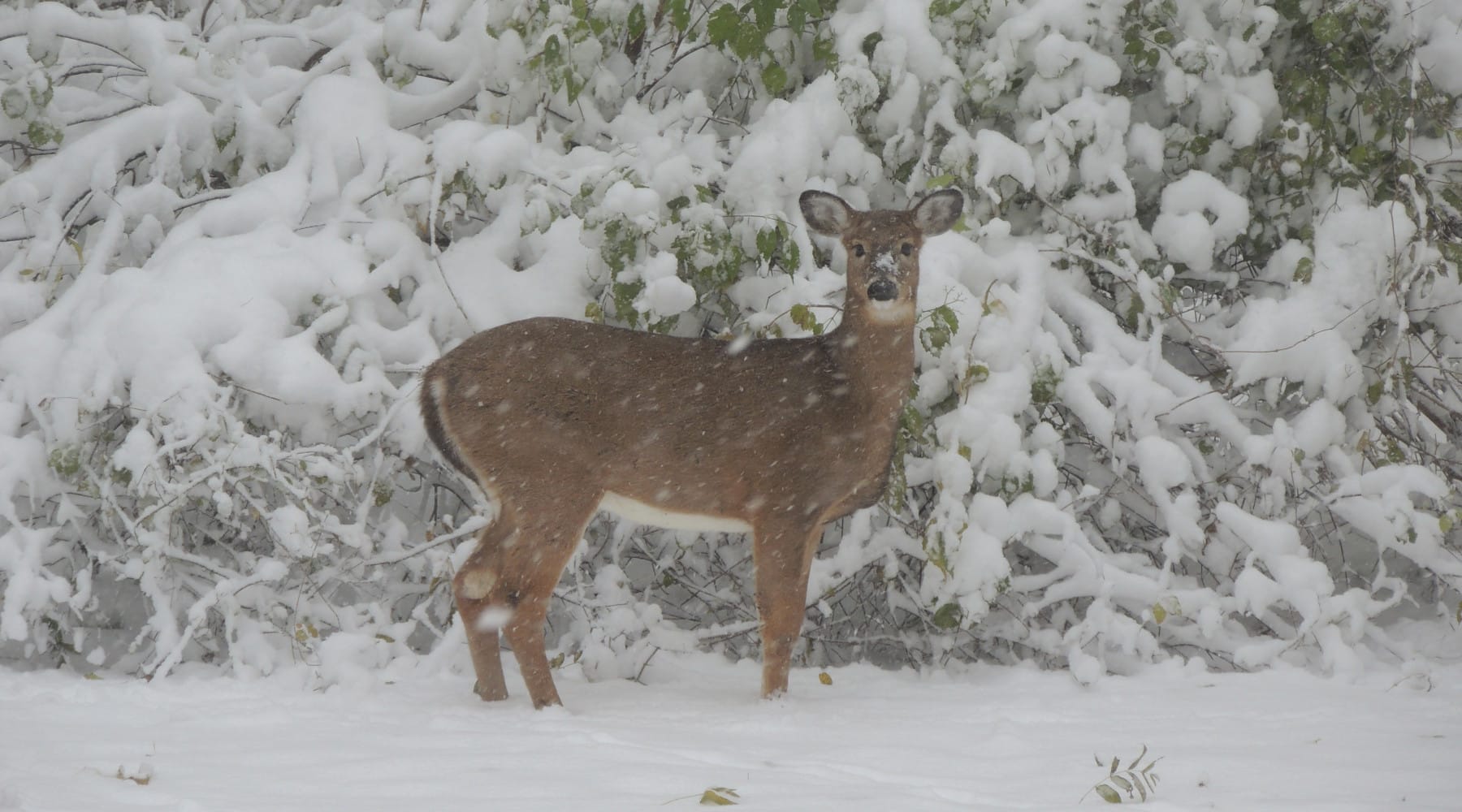

Trees and shrubs face several potential problems over the long Wisconsin winter, including feeding damage from various animals. Deer, rabbits, and voles are common culprits. Take steps now to help protect plants and keep feeding damage to a minimum this coming winter.
Protecting plantings from deer is considered the most difficult, as they can reach extended heights compared to other animals. Twigs of many trees and shrubs, both deciduous and evergreen, can be appealing to deer, even if a species is considered deer-resistant. Rabbits also will eat twigs, in addition to gnawing on bark. Winter severity and other food sources available in the vicinity influence how much potential feeding may occur on a particular planting, so what was damaged last year may be ignored this winter, or vice versa.
Fencing plants to create barriers is the most dependable method of preventing deer as well as rabbit damage. Six feet is usually the suggested height to protect trees from deer in most landscape scenarios, although higher fences may be needed in open areas like orchards or nurseries. Individual smaller shrubs may be protected from deer by making narrow cylinders with lower height fencing. Deer fencing usually has large openings in the spacing of wire so may not work to keep out rabbits. For this reason, poultry wire works best for rabbits and needs to be high enough so they cannot access plants when standing on snow.
Repellents are available to protect plants from deer and rabbits. Keep in mind the basic premise of repellents is to reduce, but not eliminate, feeding damage. Contact repellents, which are applied directly to the plant, are suggested for winter. Results will vary from location to location and as mentioned above, with the severity of winter and all available food sources in the area. Read and follow all label directions when using repellents on plants. Most products will need to be reapplied if they are to provide protection all winter.
Smallest of the three winter feeders on plants, but not the least significant, are voles, or field mice. Typical damage is gnawing tender bark near the base of trees and shrubs. Protect tender bark of younger trees with a cylinder of hardware cloth, pushed slightly into the soil to prevent voles from crawling underneath. Remove excess plant debris from the base of trees and shrubs, especially evergreen shrubs, to help reduce desirable winter vole habitat in those areas.
In addition, voles often make winding trails in lawns under the snow that become very visible in spring. Mow until growth is complete this fall to help reduce vole damage to lawn areas.
By Bruce Spangenberg, Horticulture Outreach Specialist, UW-Madison Division of Extension
