
I like to grow annual and perennial plants for their appearance, but more importantly, to help pollinators. This year, after a slow start, I had more pollinators — flies, bees and wasps — than I could identify.
Two of my favorite pollinators to watch this summer were the Hunt’s bumblebee and the brown-belted bumblebee. The brown-belted bumblebees were more numerous than the Hunt’s bumblebees. I would often see six or more on a plant at one time and catch them resting in the blooms.
As the days got shorter and the nights cooler, I started thinking about how these amazing little creatures survive the winter in North Dakota.
Let’s start with a brief overview of the bumblebee life cycle. During the summer, a queen bumblebee starts a colony. She lays eggs that develop into female workers, which collect nectar and pollen, feed the developing young and maintain the nest.
Later in the season, the colony produces males and new queens. The males’ primary purpose is to mate with new queens. The new queens and males leave the nest and mate with individuals from other colonies.
This is where the life of a bumblebee takes a sad turn. Not all bumblebees will survive the winter. The workers, males and original queen will eventually die, leaving the newly mated queens to carry the next generation into spring. Newly mated queens will eat pollen (protein and micronutrients) and nectar (carbohydrates) to store up resources for the winter.
Newly mated queens spend the winter underground, often just beneath the soil surface, in a dormant state called diapause. Diapause is insect hibernation, which is influenced by environmental cues such as temperature and day length.
Snow and leaf cover can help insulate the soil and protect overwintering queens from extreme temperature fluctuations. Maintaining this natural cover may improve overwintering habitat for bumblebees. We can increase our bumblebees’ chances of overwintering by leaving leaves and plant residue to insulate the soil and collect snow.
In the spring, the queen will search for pollen and nectar and a suitable nesting site where she can lay her eggs. After three to four weeks, the first female worker will leave the nest and start foraging for pollen and nectar, and the process starts all over again.
It really is amazing how these little creatures survive our harsh North Dakota winters.
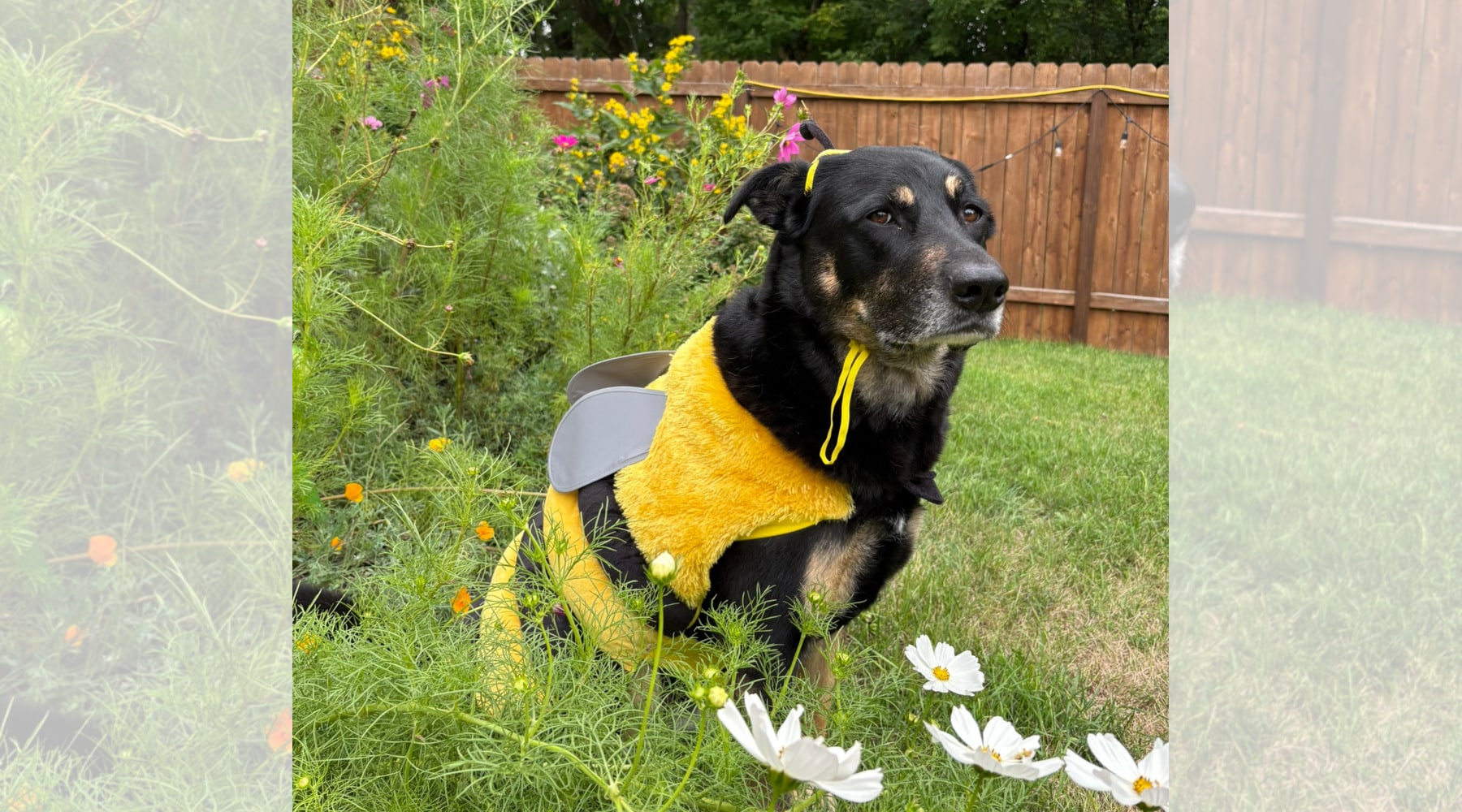
My dog will be dressed up as the extremely rare, extra-fuzzy “bumble pup-bee” for Halloween. She will overwinter by sleeping on the recliner and eating lots of treats. Happy gardening, and happy Halloween!
By Carrie Knutson, Horticulture Agent, NDSU Extension Grand Forks County
