
This may be sacrilege, but I firmly believe that turkey is not the star of Thanksgiving dinner.
In my opinion, the delicious plant-based sides steal the show. In previous Dakota Gardener columns, we have explored the origins of popular Thanksgiving foods such as squash, pumpkin and cranberries. One of my favorite sides is sweet potato casserole. After exploring its fascinating global history, you will never look at sweet potatoes the same way.
Genetic studies show that sweet potatoes originated in Central America and northwest South America. Archaeological digs uncovered sweet potato remains from 8,000 years ago in Peru. While sweet potatoes are one of the world’s oldest domesticated crops, there’s much more to its complex history.
A perplexing mystery exists regarding the spread of sweet potatoes to the South Pacific. Carbon dating shows that residents of the Cook Islands were consuming sweet potatoes in approximately 1000-1100 AD. This is centuries before European exploration of North and South America. How could the humble sweet potato have traveled from the northwest South American coast to an island group midway between Hawaii and New Zealand?
Many scientific theories exist. Ocean currents may have carried a slip of sweet potato vine on a natural raft of debris. Others theorize that birds may have carried the vine to the South Pacific.
A more interesting and human-centered theory is that Polynesian and indigenous South American cultures may have made contact centuries ago before Christopher Columbus encountered sweet potatoes in the Caribbean in 1492. A recently published genetic study shows that eastern Polynesian populations have DNA from coastal South American ancestors that may date to approximately 1200 AD.
Here’s where it gets even more interesting — one of the indigenous Polynesian (Maori) words for sweet potato is kumara. One of the indigenous dialects of the central Andes has similar names for this vegetable: cumal or cumar. While scientists still debate the origin of sweet potatoes in the South Pacific, this is a really interesting development.
Sweet potatoes’ origin story is not the only confusing aspect. Despite the name, this vegetable is not a true potato. Sweet potatoes belong to the morning glory family and not the nightshade family.
Confusion also reigns at the grocery store. You will see separate bins of sweet potatoes and yams. The yams are most likely sweet potatoes. The interchangeable names in American grocery stores have their roots in the African slave trade. When enslaved people arrived in the Americas, they encountered sweet potatoes that reminded them of the yams they grew in Africa. They then called sweet potatoes “nyami.”
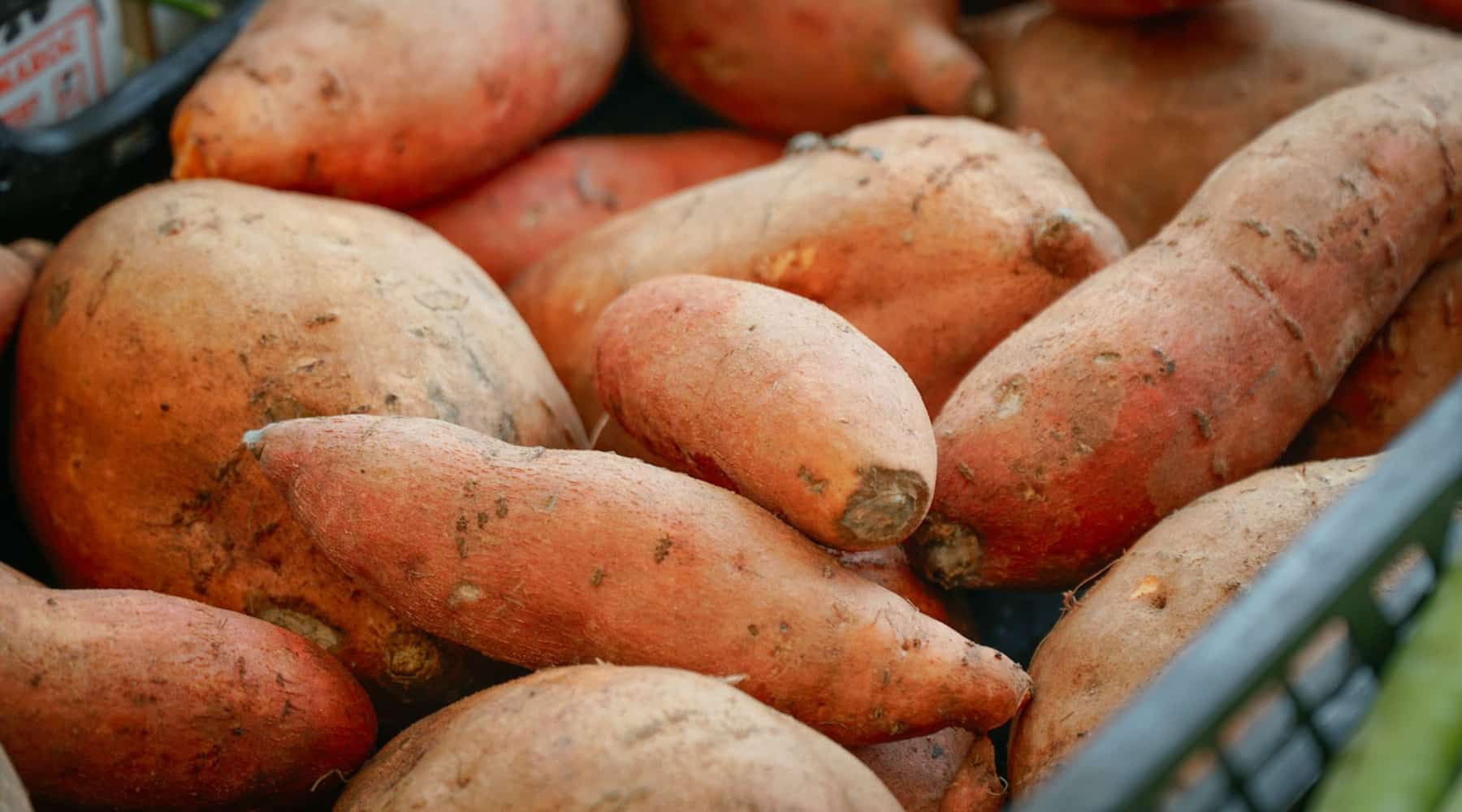
Sweet potatoes generally have a thin, smooth skin and orange, white, yellow or purple flesh. In contrast, true yams have rough, barklike skin and are starchy and less sweet. True yams are more likely to be found in specialty stores.
When you ask Aunt Edna to pass the sweet potato casserole, you now have a conversation starter about your favorite side. Happy Thanksgiving!
By Esther E. McGinnis, horticulturist, NDSU Extension
