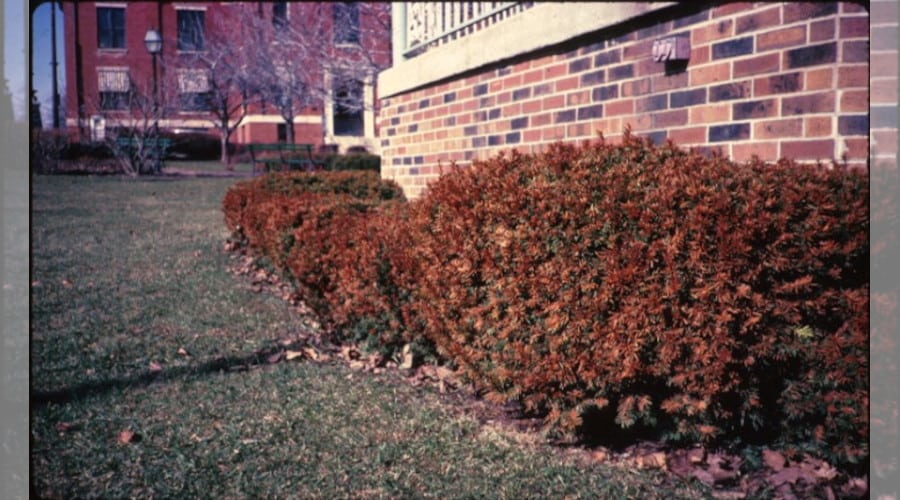

While Wisconsin winter conditions vary each year, one common issue facing evergreens is desiccation of foliage, commonly called winter burn. Damage appears as varying degrees of brown foliage in spring. There are steps to take to reduce potential winter burn, however.
Winter burn affects both needle evergreens (conifers), such as arborvitae, hemlock, yew, and pine; and broadleaf evergreens, including rhododendron, boxwood, and holly. Water drawn out of foliage while soils are frozen is not readily replaced, thus needles or leaves dry out and turn brown. Both wind and sun during winter can contribute to desiccation.
Many factors come into play regarding severity of winter burn on a particular evergreen. One key factor is the site plants are located. Exposure to harsh winter winds, such as wide open unprotected areas, significantly increases susceptibility. Plants located on south or west sides of foundations or brick walls frequently suffer damage. Foliage under snow, or facing away from wind and sun, usually shows little if any damage.
Weather plays a significant role in potential winter burn injury. Very dry fall conditions, along with lack of winter and early spring precipitation, increase severity. Fluctuating temperatures, especially unusual warm spells in late fall and winter, increases water loss while soils may be frozen. Extreme cold and prolonged winter weather extending into spring enhances the problem, as does plant exposure to deicing salts.
Evergreens with poor root system development are at more risk of winter burn. One common scenario is recent transplants made in mid to late fall. Another common example is chronic poor soil conditions inhibiting root growth and stressing evergreens.
Help alleviate potential problems this fall by continuing to water evergreens as soil conditions dictate up until the ground freezes. Additionally, mulching soils conserves moisture and protects roots from freezing and thawing damage.. A 2- to 3-inch layer of mulch is sufficient; just be sure to keep it away from the base of the trunks.
Evergreens in locations highly prone to damage can be protected by using barriers to shield them from winter sun and winds. Burlap or canvas attached to 4 to 5 foot stakes can be installed to create walls surrounding plants, or just on sides with maximum wind exposure (usually south and west). Keep barriers away from direct contact with plants and do not cover the tops. Avoid tightly wrapping plants as damage often occurs. Put protection up now and remove it in spring.
Finally, carefully plan out future evergreen additions to the landscape. Avoid windswept sites and other locations prone to winter burn. Also ensure all species and cultivars are fully hardy to your location in Wisconsin.
By Bruce Spangenberg, Horticulture Outreach Specialist, UW-Madison Division of Extension
