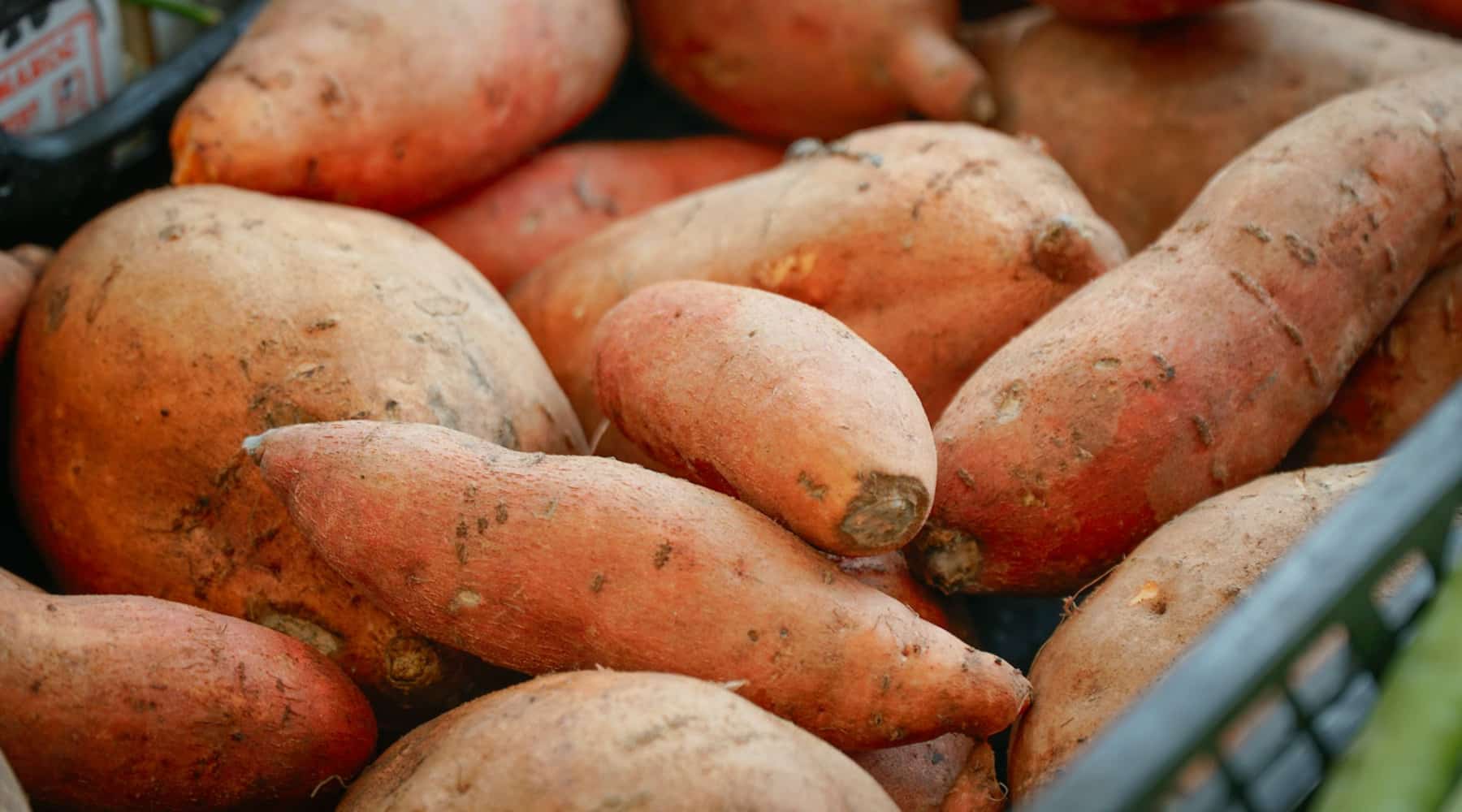

I often suggest that the best things to grow in your garden are fruits and vegetables we enjoy eating. Sometimes, though, our gardens may exceed our appetites. After growing fifteen kale plants, my family determined that we could probably live off of two. And ten cherry tomato bushes were nine too many. One vegetable my family enjoys regularly is the sweet potato. Baked, boiled, or fried, sweet potatoes are used more often than white potatoes in my home, making them a good candidate for my garden. Let’s examine what it takes to grow sweet potatoes in our Central Illinois climate.
Sweet potato (Ipomoea batatas) is a tender vegetable native to Central and South America that requires a long, frost-free growing season to mature. Sweet potatoes are not true potatoes. What is harvested from the sweet potato is a modified root called a tuberous root, as opposed to a white potato, which is a modified stem called a tuber.
Early spring is the time to start sweet potato “slips.” Slips can be started by taking a disease-free, fully grown sweet potato from last year’s crop or the supermarket, burying the bottom three-quarters in moist sand. Soon, the sweet potato will sprout slips, which are green shoots with exposed roots. Carefully remove the slips and plant them in the garden once all danger of frost has passed. If you don’t feel like starting your own slips, you can order them from a reputable seed company.
Plant slips in the garden in a mound of loose, loamy soil that reaches eight inches high. Give sweet potatoes plenty of room, as these vining plants prefer to spread. At a minimum, space sweet potatoes 12 inches apart and three feet between rows.
Little care is required once the sweet potato vines establish themselves. It can take a few weeks for the plants to establish. During this time, keep on top of weeds sprouting in the garden bed. After establishment, the vines will take off in growth and ultimately cover the exposed soil in the garden bed. Where leaf nodes touch the ground, the plant sends out roots that can eventually yield more sweet potatoes. Much of my summer maintenance is redirecting sweet potato vines out of walking paths and back into the growing bed.
Ensure even irrigation; however, don’t keep the root zone constantly wet. Do not water during the last four weeks before harvest to protect the developing roots from splitting.
Ideally, wait until after the first frost to harvest sweet potatoes—this concentrates the sugars in the roots. Once frost hits, harvest immediately to keep any decay from spreading from aboveground to belowground. If a long stretch of freezing weather is forecast, it would be wise to harvest.
Cure sweet potato roots by allowing them to dry on the ground for two to three hours, then place them in a warm room for 10 to 14 days at 85°F and 85% relative humidity. To keep humidity high, wrap individual sweet potatoes in perforated plastic bags or newspaper. Cover the sweet potatoes with a plastic sheet or cloth. After curing, store in a cool (55°F), dry location. Basements work well. Properly cured sweet potatoes should keep throughout the winter.
Sweet potatoes come in many varieties. Beauregard does well in the northern parts of the US, but there are several that can be selected.
One sweet potato plant will yield at least two pounds. This year I ordered twenty-five slips. Hopefully, my garden hasn’t exceeded my appetite once again.
By Chris Enroth, Horticulture Educator, University of Illinois Extension
