
Earlier this spring, the Georgia Environmental Protection Division (EPD) declared a statewide Level 1 drought response.
Under a Level 1 drought response, public water systems are required to educate residents about drought conditions and water conservation. Landscape irrigation rules remain the same as during normal conditions — established lawns and landscape plants may be irrigated only between 4 p.m. and 10 a.m.
The EPD monitors weather conditions, water supplies, and water demand to determine drought severity and whether public water systems can continue meeting the needs of Georgia residents.
Although parts of Georgia received significant rainfall recently, long-term drought conditions persist for most of the state. As of June 4, 2026, more than half of the state remained in severe or extreme drought, according to the U.S. Drought Monitor. Over the past six months, much of Georgia has received 4 to 12 inches less rainfall than normal, leaving reservoirs, ponds and groundwater supplies below typical levels despite recent rains.
Because drought conditions can develop quickly — sometimes within just a few weeks during a “flash drought” — residents should prepare their landscapes before water becomes scarce.
Supported by University of Georgia Cooperative Extension, the Georgia Green Landscape Stewards program encourages water-wise landscaping practices that improve drought resilience, lower water costs and help prevent landscape damage during dry periods. Residents can also pursue certification by meeting a series of sustainability-focused criteria.
Simple steps to protect your landscape
A few basic maintenance practices can help landscapes withstand drought stress.
Check mulch levels
- Maintain about 3 inches of mulch in planting beds.
- Extend mulched areas two to three times beyond the tree canopy when possible. Just remember to pull mulch 2 to 3 inches away from trunks of trees and shrubs to keep them healthy.
- Mulch helps retain soil moisture, suppress weeds, moderate soil temperatures and reduce water loss through evaporation.
Raise your mowing height
- Taller grass shades the soil and helps conserve moisture.
- Mow at the upper end of the recommended height range for your turfgrass species.
- Use a mulching mower whenever possible to return grass clippings to the soil, where they provide valuable nutrients and organic matter.
Smart irrigation practices
When irrigation is necessary, use water as efficiently as possible.

- Water deeply enough to moisten the soil 8 inches or more below the surface. Deep watering encourages deeper root systems that are more drought tolerant.
- Water between 4 p.m. and 10 a.m. to reduce evaporation losses.
- Avoid overwatering. Excess irrigation can promote disease, wash nutrients below the root zone and increase runoff.
- If water begins running off the landscape, divide irrigation into shorter watering cycles.
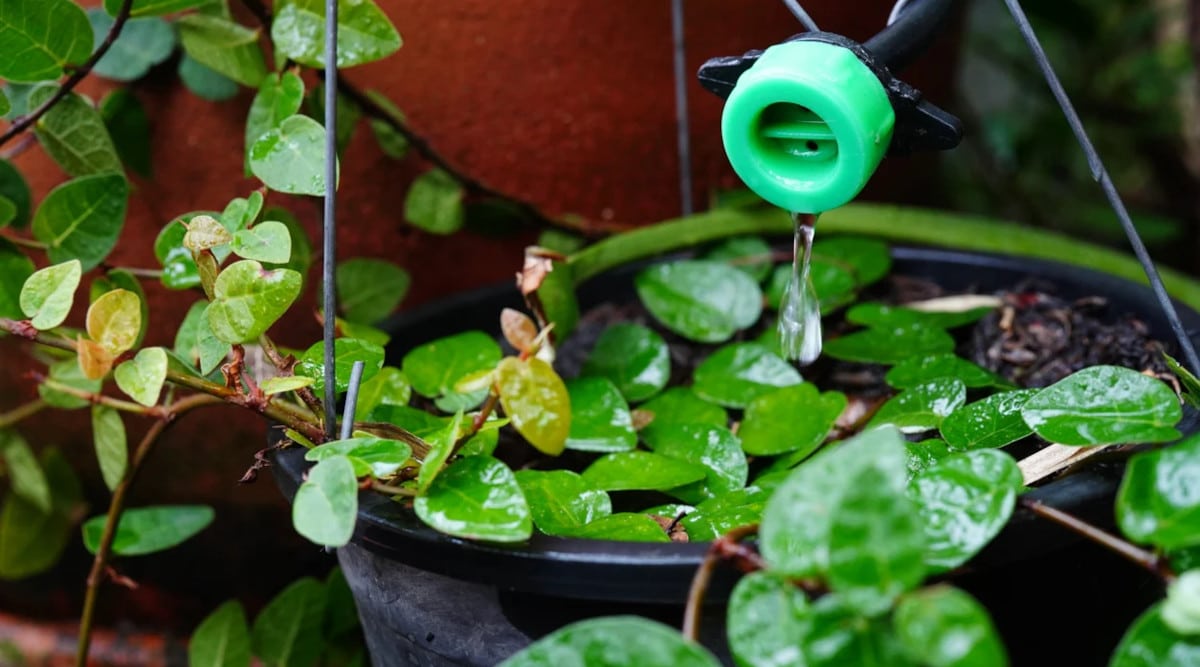
- Use drip irrigation for shrubs, flower beds and vegetable gardens whenever possible. Drip systems deliver water directly to plant roots and minimize evaporation.
Design a more drought-resilient landscape
Long-term landscape planning can significantly reduce water needs.
- Limit high-water-use areas to about 10% of the landscape. Reserve larger portions of the property for plants that require only occasional or infrequent irrigation.
- Match plants to site conditions, including sunlight, soil type and drainage.
- Incorporate native trees and shrubs adapted to Georgia’s climate. Once established, many native plants require little supplemental irrigation.
- For an in-depth guide to native plants that thrive throughout the state, visit the UGA Extension expert resource series, “Native Plants for Georgia.”
- Leave fallen leaves beneath trees when practical. Leaf litter helps conserve soil moisture, improves soil health and recycles nutrients.
Conserving water starts before drought arrives
Preparing landscapes for drought before conditions worsen can save time, money and water. Landscapes that include drought-tolerant plants, mulch and efficient irrigation systems generally require less maintenance and fewer water inputs during dry periods.
By adopting water-wise practices now, homeowners can help protect their landscapes while conserving one of Georgia’s most valuable natural resources.
By Martin Wunderly, University of Georgia
