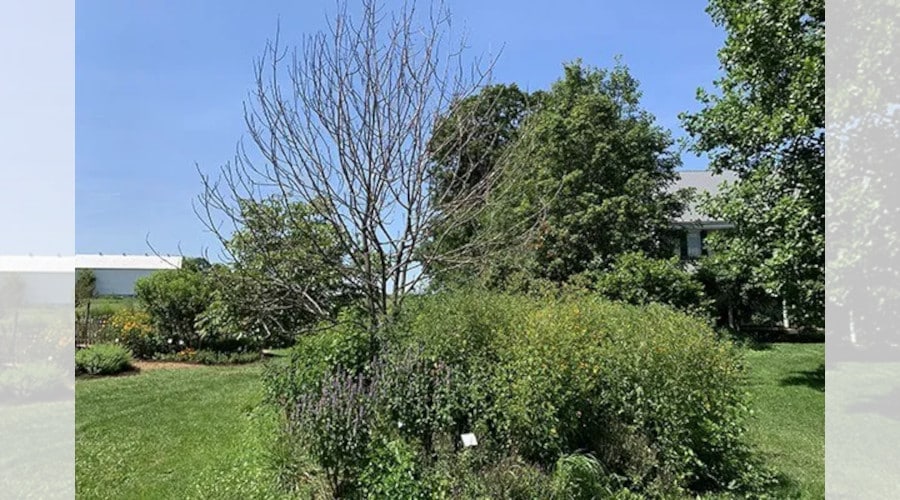

Excess soil moisture causes two major problems for many ornamental plant species. First, when soil space is filled with water for extended periods, there is no room for oxygen molecules, and plants take in oxygen through the root system. Another problem that can develop is an infection of the plant by a pathogen that thrives in wet soil conditions. One very common one is Phytophthora cinnamomi, which is a fungal-like organism. Azaleas, rhododendrons, yews, junipers, and many other woody plants are highly susceptible. There are also numerous herbaceous annuals and perennials that are susceptible to Phytophthora. In both cases, early symptoms include wilting leaves (similar to drought stress) and the death of twigs and small branches. This can quickly progress to the death of the plant.
So, what can be done? This can be a tough situation. Redesigning an established landscape to raise plant root systems above the old soil line is probably not a viable option. For new plantings, topsoil could be brought in, and a raised bed can be established. Water from downspouts can be redirected away from valuable landscape plants. For plants that have been confirmed to have Phytophthora, either resistant cultivars of the plant or a different, resistant plant species would have to be introduced, and they may not be what is preferred in that location.
There are fungicides that can be used to try and manage the pathogen in the soil. These are applied as drench applications, which are taken up by the roots and move systemically within the plant. Fungicides that can be used in nursery and landscape settings include fosetyl-Al (Aliette), metalaxyl-m (Subdue MAXX), and pyraclostrobin + boscalid (Pageant Intrinsic). There are two additional products that can be used in nurseries: etridiazole (Terrazole) and propamocarb hydrochloride (Banol T&O).
In addition to Phytophthora root rot, other pathogens can affect ornamental plants by causing root problems. Fusarium, Pythium, and Rhizoctonia are true fungi that can kill plants. They are more commonly seen on seedlings of herbaceous annuals and perennials. Like Phytophthora, Pythium is a fungus-like organism and is virulent under wet soil conditions.
Symptoms of Fusarium and Rhizoctonia appear under warmer, drier soil conditions when the compromised plant begins to experience water stress. Pathogen identification is key to determining treatment, as not all fungicides provide equal protection against all diseases. Knowing what culprit you are dealing with will also help you choose the right cultivars for plant replacement. Visit the Penn State Plant Disease Clinic to learn how to submit a sample for identification.
By Tim Abbey and Alyssa Collins, Ph.D., Penn State Extension
