
My mom was excessively neat. The house was immaculate, and dust was her sworn enemy. I know that I severely aggravated her as a child because I didn’t share her inclination for order and cleanliness.
Not surprisingly, my mom vigorously cleaned up her flower gardens each fall. Many Dakota Gardener readers may seek to do the same. However, recent scientific research shows that a lazier, messier approach to fall landscaping is beneficial in many ways.
Leave the tree leaves on your lawn. Autumn leaves are precious natural resources. A small to moderate amount of leaves can be mulched into the lawn by passing the mower over them two or three times. The leaves contain nitrogen and organic matter that can enrich your soil. Furthermore, the leaf pieces shade the soil and inhibit weed germination.
As with everything, moderation is important. Fifty percent of the lawn should still be visible after leaf mulching.
If you have excessive amounts of leaves, don’t waste your energy bagging and discarding them. Simply rake them into the nearest flower or pollinator garden. The leaves provide overwintering habitat for butterflies and moths.
We have all heard about the tremendous monarch migration. Did you know that most butterflies and moths do not migrate for winter? For example, the stunning mourning cloak butterfly overwinters under a thick blanket of leaves. The leaves insulate the hibernating butterflies and prevent temperature fluctuations. Mourning cloaks are one of the first butterflies to emerge in spring.
A side benefit is that the leaves protect marginally hardy plants and may increase winter survival. Considering that El Niño may bring less-than-average snow to the upper Great Plains, a layer of leaves serves as an insulating substitute for snow.
Being lazy this fall also pertains to the flower garden. Leave some native flowers intact over the winter to create a natural buffet for the birds. Asters, blazing stars, beebalms, black-eyed Susans, coneflowers and sunflowers produce persistent seedheads that provide food for nuthatches, goldfinches, chickadees and cardinals during winter.
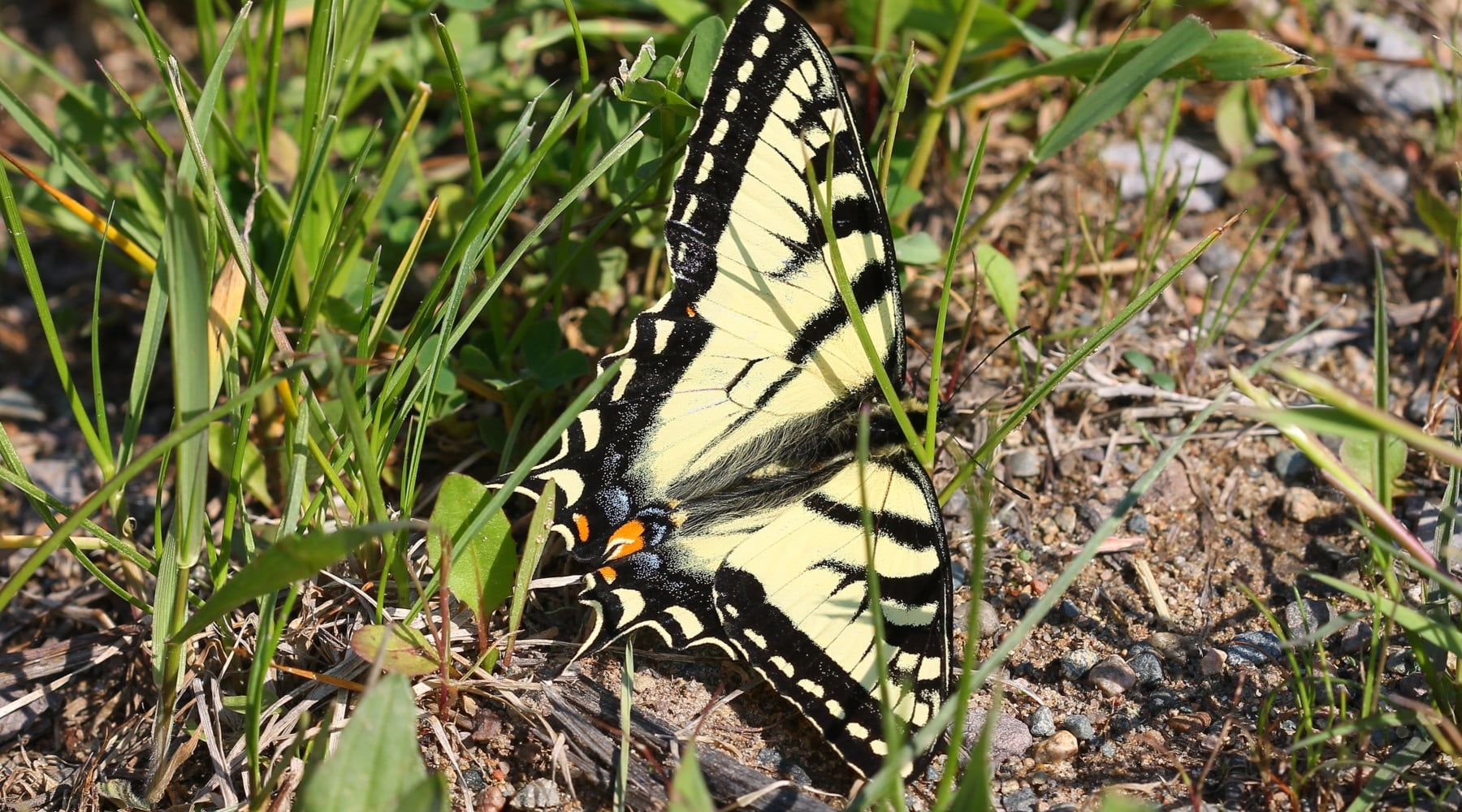
Standing flower, grass and shrub stems may also support overwintering Canadian tiger swallowtails. These magnificent butterflies overwinter in chrysalises attached to plant stems and tall grasses. Hardy swallowtails produce an antifreeze chemical that protects them even in the coldest winters.
Speaking of tall grasses, I leave them standing in the garden over the winter for a number of reasons.
Native ornamental grasses such as switchgrass, little bluestem and big bluestem look beautiful in the winter garden, particularly when frost graces the seedheads.
Bumblebees like to nest under native grasses. When left standing, the grasses catch snow that insulates the pregnant queen bumblebees, the only colony survivors that overwinter. We want to protect these hibernating queen bumblebees to ensure an early-spring pollinator population for our apple and fruit trees.
Have I convinced you to be lazy this fall? Go ahead, put up your feet and drink a pumpkin spice latte while enjoying the beauty of your fall garden.
By Esther E. McGinnis, Horticulturist, NDSU Extension
