
The crisp fall weather has arrived, and I’m here for it. For gardeners, this season is often associated with closing the garden for the year, but before we get too excited about taking a slight break, there is one final planting that can help you get ahead for next year: garlic.
I inherited garlic bulbs a few years ago when we moved into our house in the spring, and have become a huge fan of growing this ultra-delicious (in my opinion) bulb ever since. At the time, I had no idea how easy it was to grow, but it has become a staple in my garden. This article continues my mission of encouraging people who love eating garlic to give growing it a try.
Hardneck vs Softneck
Garlic (Allium sativum) is a member of the Amaryllidaceae, a family of mostly herbaceous perennials and bulbs. Familiar garden plants in the same family include onions, leeks, and chives. Unlike the single bulb of an onion, garlic develops as a bulb subdivided into several cloves encased in a papery skin. There are two types of garlic home gardeners commonly grow: hardneck and softneck. There are differences between the two types that influence the decision as to which type is right for a garden.
Hardneck garlic is more cold-hardy and the most common type grown in Illinois. The skin is thicker but more brittle, the central stem turns rigid at maturity, and the flavor profile is stronger and more complex. Fewer cloves are produced per bulb, but the cloves are larger than those produced by softneck varieties.
Softneck garlic has a more subtle flavor, performs better in regions with mild winters and hot summers, and produces leaves that remain soft at maturity. The soft leaves accommodate braiding, a popular method of storing softneck garlic after harvest.
Growing Garlic
Garlic grows best when grown from cloves rather than seed. Cloves can be obtained from local garden centers, through mail orders, or planted from previous year’s bulbs. For the highest yield, plant cloves that are from the largest bulbs. Garlic bulbs from the grocery store are not recommended as planting stock because they are usually soft neck varieties and not well suited for Illinois’s cold winters.
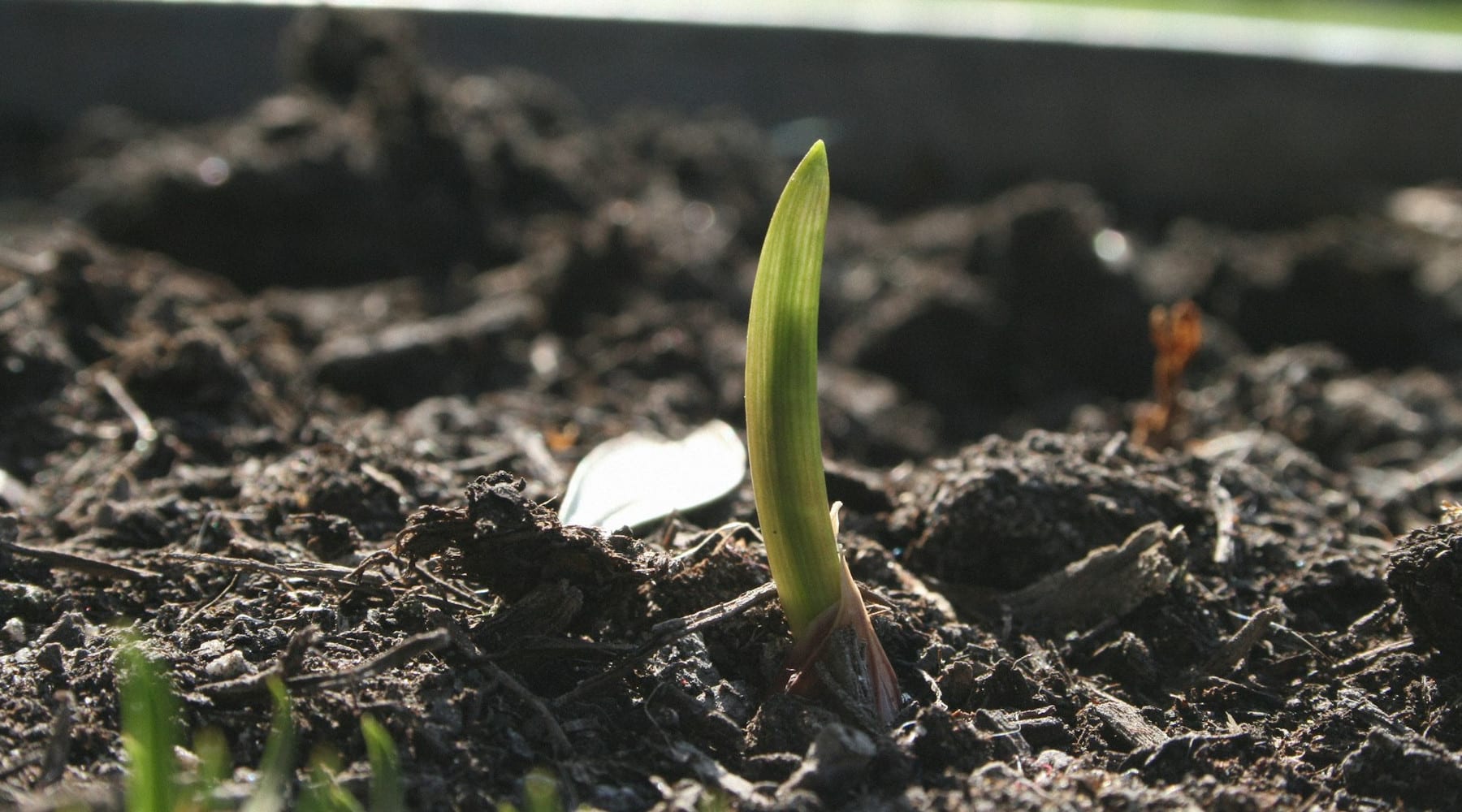
While much of the garden is finishing its growing cycle in the autumn, producing a good crop of garlic begins in the fall. Garlic bulbs need a cooling period prior to bulb formation; therefore, a fall planting is ideal. Plant in a prepared garden location within two weeks of a killing frost. Roots will begin development and shoots may appear in the fall. Growth will pause during winter months and resume once spring soil temperatures begin to warm.
Grow garlic in well-drained soil with high fertility. Garlic develops best in soils that offer consistent moisture but are not saturated. Sites high in organic matter, or those amended with organic matter, help retention moisture and provide nutrients to developing bulbs. Avoid heavy clay soils, which can result in bulbs that are misshapen or retain too much moisture, resulting in rot.
Plant cloves with the pointed end facing upward, about two to three inches deep and three to six inches apart in rows. A layer of straw or leaf mulch helps protect the bulbs in the winter by suppressing weed growth, preserving soil moisture, and moderating temperature fluctuations.
In the late spring, hardneck varieties will produce scapes (flower stalks), which should be removed. By removing the blooms, more energy is allocated toward bulb development, and a better crop will be harvested.
Garlic is ready to harvest in mid- to late summer when the leaves begin to fade. A good rule of thumb is to harvest bulbs when about half of the leaves have turned yellow. Harvest by lifting the bulbs from the soil with a shovel or garden fork, being careful not to damage them. Cure harvested bulbs by holding them in a warm, dry, well-ventilated location for several weeks. Leave garlic leaves on the bulbs through curing. Once bulbs are ready for storage, prune the leaves back, leaving one to two inches of stalk.
Final Word
Garlic is a simple and productive way to extend the gardening season and add a flavorful crop to your garden. Choose the right location, select the type best suited to your growing conditions, and care for it well. In return, you will be rewarded with robust garlic bulbs that can be added to your favorite recipes or shared with family and friends.
Good Growing Fact of the Week: The strong odor associated with garlic is the release of the volatile organic sulfur compound allicin. It is produced as a plant defense mechanism initiated when plant tissue is damaged to discourage pests and pathogens from damaging the plant. Also, each year, you can celebrate National Garlic Day on April 19.
By Emily Swihart, Horticulture Educator, University of Illinois Extension
